The road from Lahore to Chillas via Babusar Top is paved and suitable for all vehicles. From Chillas to Raikot Bridge, some patches are worn-out roads. After Raikot Bridge to Khunjerab Pass, a smooth and Silky Road. We offer the best Hunza Valley Tour Packages with all-inclusive services.
Must Read: Must Visit Places in Azad Kashmir
Read More: Beautiful Places of Skardu Valley
Hunza Valley is a district of Gilgit Baltistan. The most beautiful valley of Pakistan. It attracts many tourists every year due to its highest peaks and the diversity of its land. Read more about the best places to visit in Hunza Valley for complete guidance.
Must Read: Historical Places to Visit in Pakistan
Must Read: Famous Places to Visit in Hunza Valley
Discovering the secret of Hunza water has not been easy. This water is closer to distilled than plain tap water on the one hand. It does not mainly contain ions of different dissolved substances. Distilled minerals are the same as ordinary water. Yet it mostly consists of rich minerals, with trace amounts of other elements.
Which are not decomposed; they exist in a stable form. Very small minerals – colloids – are suspended in the liquid. The water is partially cloudy and, for this reason, is called ‘glacial milk.’ It differs from ordinary potable water in many physical and chemical properties.
Which substances in this multitude of minerals are essential in providing Hunza water with special properties?
Hunza water, the meltwater from the Ultar Glacier, is natural, pure, and excellent for physical and mental health.
Elusive Hunza water reverses the aging process and prevents various dangerous diseases, including cancer and diabetes. This moonshine, brewed from pure water, is found locally in Hunza’s main town and has miraculous health effects.
Must Read: Must Visit Places in Naran Kaghan
Suggested Read: Murree Nathia Gali Tourist Attractions
Boating prices vary based on the distance traveled on Attabad Lake. The price is Rs. 2500 for a full boat, and 15-16 persons can be accommodated in this motor boat. Jet Ski is also available at discounted rates. Price may vary based on distance, time, and the boat’s speed.
Must Read: Beautiful Visit Places in Swat Valley
Suggested Read: Top Places to Visit in Kumrat Valley
Hunza weather is a bit warm in summer. The Hunza is accessible year-round, even during the snow season, with 4×4 Jeeps. In the summer, the weather in Hunza remains cold and chilly. At night, Hunza Valley has cool, pleasant, mild weather. Check the temperature and season before visiting this place.
The temperature goes below zero in winter, and many people enjoy snowfall. Upper Hunza and the Khunjerab Pass are inaccessible during the winter season. The Khunjerab Pass is officially closed by the authorities from December to the end of March.
Read More in Details: Ideal Time to Visit Hunza Valley
At an elevation of 2,559 meters, Attabad Lake, also known as Gojal Lake, sits in Hunza Valley, Gilgit-Baltistan, Pakistan. A natural disaster created it in January 2010. Since then, its deep blue waters, framed by Karakoram peaks, have drawn local and international visitors.
Before JanJanuary 4010, Attabad and neighboring villages such as Shishkat, Gulmit, Ayeenabad, and Gulkin were situated along the Hunza River. The Karakoram Highway traversed the region, functioning as a significant trade route between Pakistan and China. Over time, the slopes had been weakened by erosion, snowmelt, rainfall, and a 2002 earthquake in Astore that caused cracks, thereby increasing the area’s instability.
On 4 JJanuary 410, a massive landslide buried Attabad village and blocked the Hunza River about 14 km east of Karimabad. Twenty people were killed, and dozens of homes were destroyed. The blockage disrupted the river’s flow for months and submerged over 19 km (12 mi) of the vital Karakoram Highway.
Following the river blockage, water accumulated behind the landslide dam. By early June 2010, the lake extended 21 km (13 mi) in length and reached a maximum depth of approximately 100–109 m (330–358 ft). While some reports indicate depths up to 122 m (400 ft), the most frequently cited figures are around 100 m.
The rising waters inundated villages such as Ayeenabad, Shishkat, and parts of Gulmit and Gulkin, displacing approximately 6,000 residents and isolating an additional 25,000 individuals when roads became inaccessible. Homes, shops, schools, orchards, and ancient Buddhist and Muslim heritage sites were submerged. Essential resources, including food, medicine, and supplies, became scarce as transportation routes, including helicopter access, were disrupted.
Emergency responses included aid from the Punjab government (100 million PKR, plus 0.5 million for the families of the deceased) and relief camps for the displaced.
By May 2010, authorities began digging a spillway to let water flow safely over the landslide dam. By August, it was operating properly, preventing catastrophic overflow. Although the immediate threat passed, the lake remained—and continues to be—a permanent change in the landscape.
After the Karakoram Highway was submerged, both travelers and residents depended on makeshift boat crossings. Traditional wooden boats, known as “dongas,” transported people, vehicles, goods, and livestock across the lake. Boat operators earned income by charging approximately $3–5 per crossing.
In 2015, a major reconstruction project restored the highway. Chinese engineers built a 24 km bypass, including five tunnels (totaling 7 km) and bridges, and launched it on SepSeptember 14015, at a cost of US $275 million.
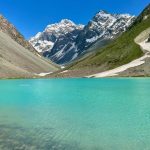
More than a decade later, Attabad Lake continues to attract tourists with its clear turquoise waters, striking mountain peaks, and remarkable formation history. The lake contributes to the local economy through the following activities:
Attabad Lake is accessible by road from Hunza Valley and is located approximately 14 km east of Karimabad in Gilgit-Baltistan. The following are common travel options to reach the lake:
Tourism has revitalized the local economy. The number of hotels, guesthouses, shops selling dried fruit and crafts, boat services, and guide positions has increased in the area. Local foods such as Chapshuro, walnut cake, apricot soup, and fresh trout have become highlights of the visitor experience.
Tour operators also offer cultural stays, allowing visitors to experience the hospitality, music, and traditions of the Burusho and Wakhi communities.
Growing tourism brings challenges:
Local organizations are promoting eco-tourism, reforestation, and awareness initiatives to safeguard the lake.
Several accommodation options are now available at Attabad Lake. For further information on lodging or to arrange a tour, consult local travel agencies specializing in the region.
WhatsApp us