Khewra Salt Mine Ticket Price | Ultimate Travel Guide

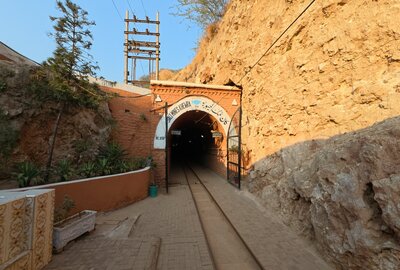
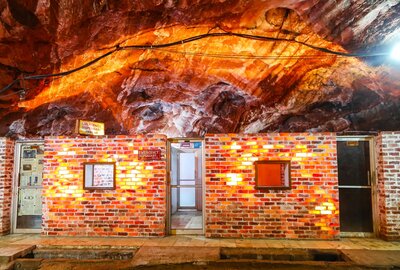
The Khewra Salt Mine, located in Khewra, north of Pind Dadan Khan in the Jhelum District of Punjab, Pakistan, is the largest salt mine in the country and the 2nd-largest in the world, following Poland. Spanning approximately 300 kilometers, it has an estimated reserve of about 22 million tons and is the 2nd-biggest source of edible salt globally.

The entry fee to the Khewra Salt Mine is Rs. 800. As a major tourist attraction, it attracts 250,000 visitors each year.

Timings of Khewra Salt Mine

The mine is open daily from 9 AM to 4 PM. For more information, you can visit the official website of the Nature Adventure Club, which represents the Khewra Salt Mines. Located at the foothills of the Salt Range, this salt mine is the oldest in the subcontinent’s mining history. The salt deposits form an irregular dome-like structure with seven thick seams, accumulating a total thickness of about 150 meters.

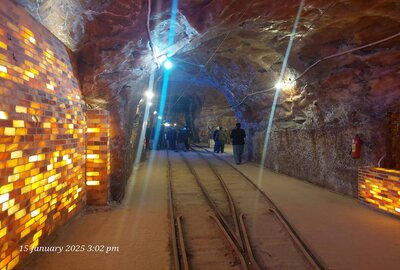
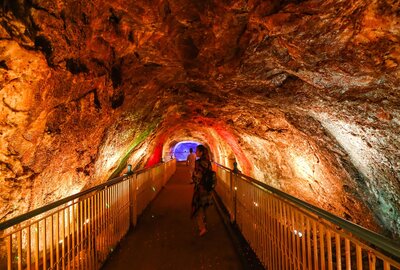
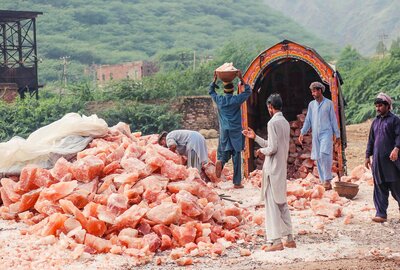
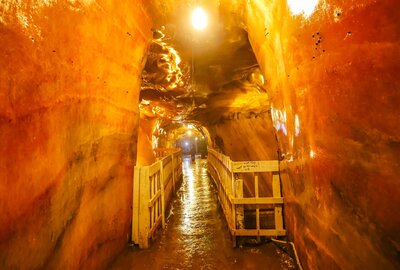
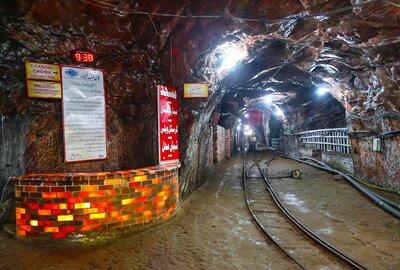
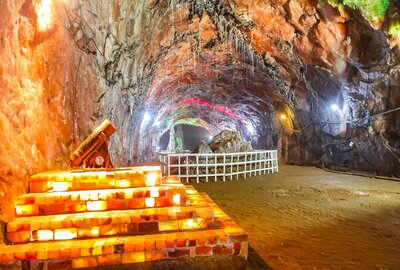
In some areas, the rock salt has a purity of 99%. The salt appears in various colors, including transparent, white, pink, and reddish shades, with special areas exhibiting crystalline structures. Within the mine, you can see beautiful alternating bands of red and white salt. The mine comprises 18 operational levels, with a total tunnel length exceeding 40 kilometers.

For inquiries, the Khewra Salt Mines helpline is at (0544) 231137.

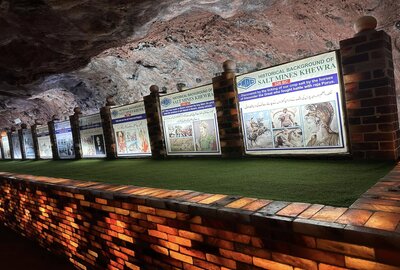
While the salt mine is a popular tourist destination today, its history includes a dark period of oppression and forced labor under British rule in the 1800s. Miners, including pregnant women and children, were locked inside the mines and not allowed to leave until they met their quotas. Strikes during this era were often met with violence, culminating in a tragic event in 1876 when twelve miners were shot and killed at the entrance. You can visit their graves, which are still at the middle gates of the mine.

You can find the salt produced from this mine in local grocery stores labeled as “Himalayan Salt.” This reddish or pink rock salt is known for being significantly more flavorful than standard table salt and has a fascinating history behind it.

Khewra Salt Mine Ticket Price 2026

Without TrainTicket PriceWith TrainTicket Price
AdultRs. 430AdultRs. 680
Student (Valid Student Card)Rs. 220Student (Valid Student Card)Rs. 470
Children (2-12 Years)Rs. 220Children (2-12 Years)Rs. 470
Senior Citizens (Above 60 Years)Rs. 220Senior Citizens (Above 60 Years)Rs. 470
Foreigner Adult20 USDForeigner AdultRs. 5850
Foreigner Kid10 USDForeigner KidRs. 3050
Train Ride ChargesRs. 250Train Ride ChargesRs. 250

Please note that the entry fee for the Khewra Salt Mine is Rs. 500 per head for students and Rs. 800 for adults, 20 USD for foreigners. It is advisable to check the season before planning your visit to the Khewra Salt Mines.

Things to do

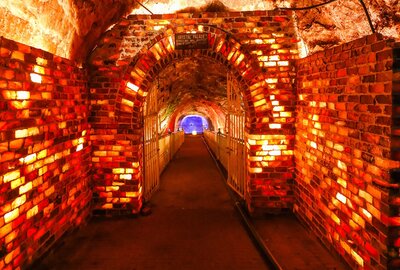
Crystal Clear Salt Formations – Sparkling white and pink salt crystals line the tunnels, creating magical patterns.

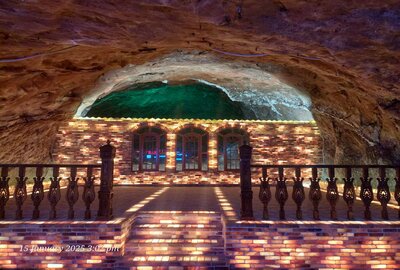
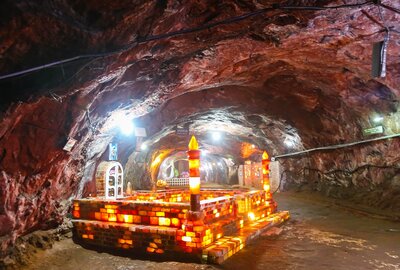
Salt Mosques & Monuments – Mini replicas of famous landmarks such as the Minar-e-Pakistan and Badshahi Mosque, built entirely from salt bricks, are illuminated with colorful lights.

Salt Bridge (Pul Saraat) – A naturally formed narrow salt bridge without pillars, admired for its unique structure.

Salt Ponds – Underground pools reflecting the glittering salt ceilings.

Salt Fountain – A natural fountain created by water mixed with salt deposits.

Health Chambers – Certain chambers are renowned for their therapeutic environment, which is especially beneficial for asthma patients.

History

Khewra Salt Mines is the 2nd-largest salt mine in the world, following Poland. We organize guided tours throughout Pakistan. The salt range is a remarkable natural beauty located between the Jhelum and Indus rivers in Punjab. This low mountain range is rich in salt and other minerals and is teeming with wildlife. It is often referred to as the “Museum of Geology,” as it contains rocks from the Precambrian period (millions of years old) to the present.

The Khewra Salt Mine is believed to have been discovered when the horses of Alexander the Great licked the salt from the crop salt during his battle with Raja Porus. ASP Khan, a local leader of Khewra, informed Emperor Akbar the Great about the existence of salt deposits in Khewra, leading to the initiation of mining activities.

In 1809, the Sikhs took control of the salt mines from the Mughals. The British then took over the salt mines in 1849. During this period, a source of drinkable water was discovered and transported to Khewra through a wooden tunnel. A motorable road was constructed between Khewra and Pind Dadan Khan in 1856.

The Khewra Salt Mine employs the room and pillar mining method, in which 50% of the salt is extracted, creating rooms, while the remaining 50% serves as pillars to support the overburden. The width of the rooms typically ranges from 30 to 50 feet.

To facilitate the transport of salt throughout the subcontinent, a railway station in Khewra and the Victoria Bridge over the Jhelum River were constructed in 1890.

By 1914, salt production reached 80,000 metric tonnes. Two steam engines were used in the mines for transporting rock salt, and a powerhouse with two diesel electric generators was installed in 1924-25.

Area and Volume

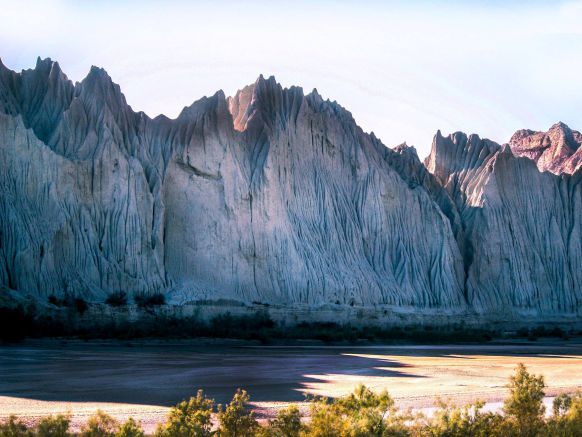
The area boasts stunning landscapes with various attractions, including the largest salt mine in Asia, ancient Hindu temples, and pilgrimage sites. The salt range stretches over 300 kilometers in length and spans 8 to 30 kilometers in width, with an average height of 2,200 feet. It extends from Baghanwala, the Jhelum River, to Kalabagh, the Indus River.

The range consists of two parallel lines of low, rugged hills that run from east to west between the Soan and Jhelum rivers. It features small intermountain valleys, basin plains, plateaus, and several saline lakes. At Kalabagh, the Salt Range crosses the Indus River and continues southwest into the Bannu District.

Neighbourhood

On the southern side, the hills form a cliff approximately 700 meters (2,300 feet) high, rising sharply from the Jhelum plain. Conversely, the northern side slopes gradually down towards the Soan River and Islamabad. Between these two lines of hills are several relatively prosperous villages, including Forts Sakaser and Tilla Jogian, which are the highest peaks in the Salt Range. Khabeki Lake and Uchhali Lake are among the popular lakes in this region.

The salt range is composed of salt deposits left behind when the sea that once covered the Indus plain evaporated around 600 million years ago. It serves as the first natural barrier separating the subcontinent from Asia, aligned with the geological collision between the Indian and Asian plates. Rocks and fossils found in the Salt Range provide a comprehensive record of the Earth.

Historians Arian and Ptolemy were the first to mention the Salt Range. Alexander the Great passed through Nandana, a traditional pass through the range, to battle Raja Porus on the banks of the Jhelum River in 326 BC. In the third century BC, the district played a significant role in history.

Swat Tour Banner
Naran Tour Banner
Hunza Tour Banner

Make My Trip

✓ We assure the privacy of your contact data.
✓ This data will only be used by our team to contact you and no other purposes.

More Places to Visit in Pakistan

Karachi (1)
Tourist Attractions in Karachi | Best Places to Visit
December 3, 2025
peshawar beauty
Family Things to do in Peshawar 2026 Must Visit Places
December 3, 2025
Malaysia Pakistan
Travel to Pakistan from Malaysia | Step by Step Guide
December 1, 2025
Lahore Tourist Attraction
Top 10 Best Things to do in LAHORE with Family
November 4, 2025
Qaqlasht Chitral Attraction
Best Places to Visit in Chitral Kalash LOVE to EXPLORE
November 4, 2025
Tourist Attractions in Islamabad
Top 10 Family-Friendly Things to Do in Islamabad
October 20, 2025
Lakes of Pakistan
Top 45 Famous Lakes of Pakistan | Natural Artificial
October 11, 2025
Swat Kalam Best Time
Best Time You LOVE to Explore Swat Kalam Malam Jabba
August 6, 2025
Pakistan Tour Packages > Pakistan Travel Guide > Khewra Salt Mine | Ultimate Travel Guide 2026