Here are details for Karomber Lake – Broghil Valley Trek Complete Introduction:
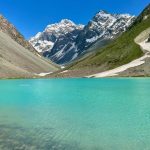
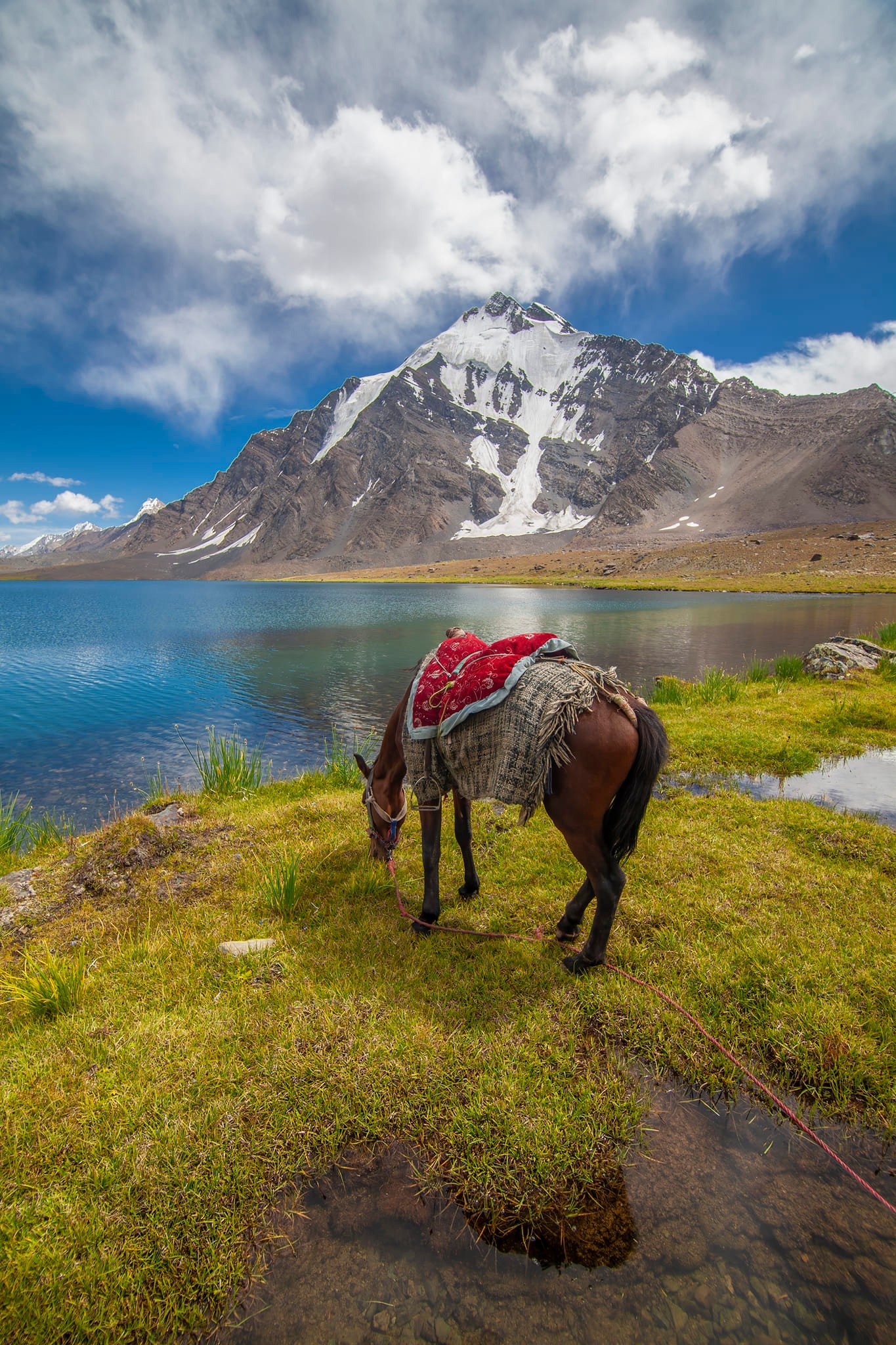
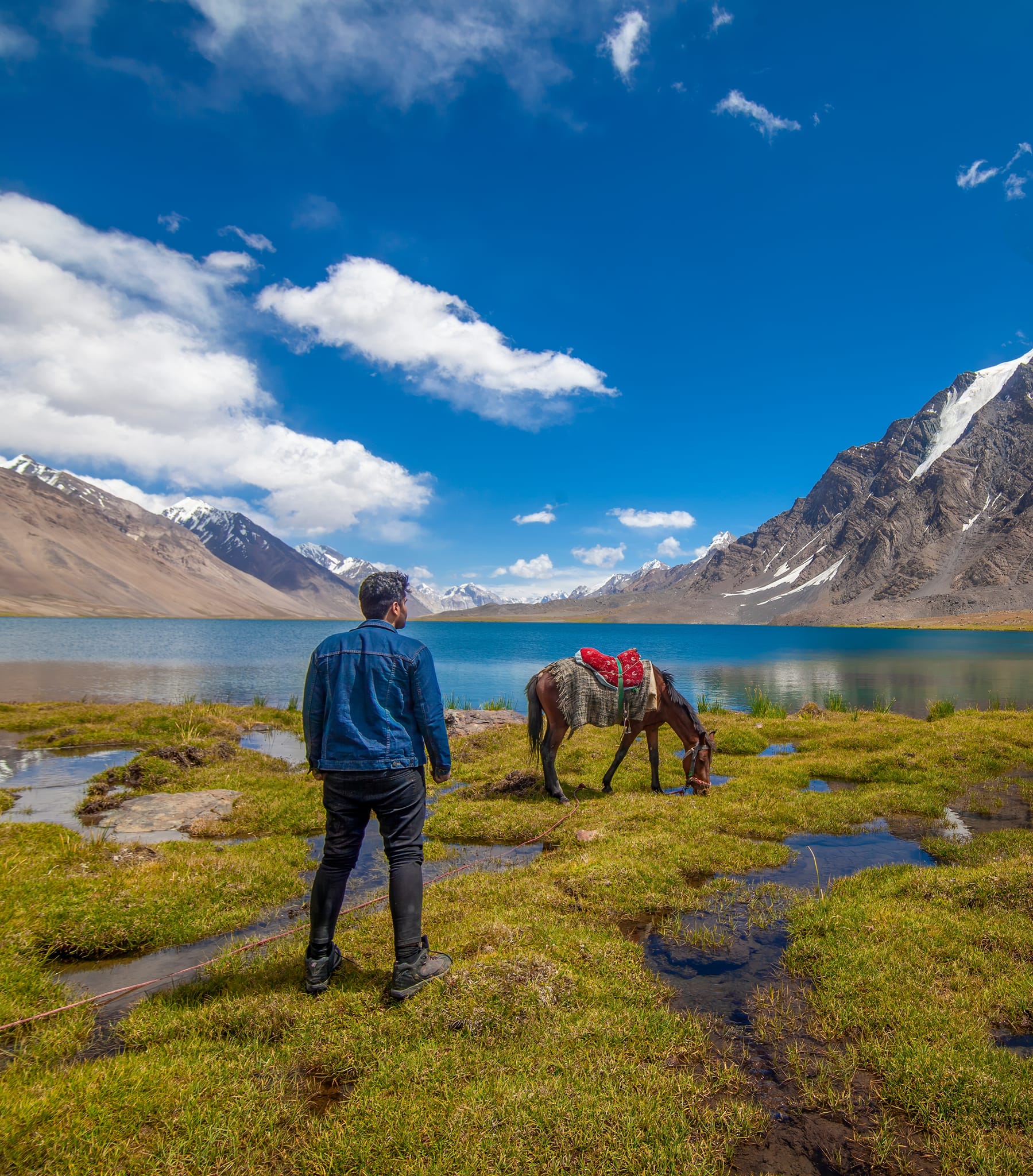
Karambar Lake is a hidden jewel and one of the most breathtaking and remote lakes in Pakistan. In fact, its crystal-clear waters lie absolutely still, perfectly mirroring the snow-draped mountains that watch over it—a sight so pure and mesmerizing, it feels like stepping into a dream. Karambar Lake is one of the highest alpine and biologically active lakes in Pakistan and is the biggest lake in the north. It has a max length of 3.2 km by displacement and a max width of 1.5km. It is a round trip of nearly 8km if you plan to circle the lake.
Moreover, what makes Karambar Lake truly special is its unique place in the world. Nestled right on the border between Gilgit-Baltistan and Khyber Pakhtunkhwa, it is cradled by the Ishkoman Valley on one side and the wild Broghil Valley on the other. For centuries, people from diverse cultures have called these highlands home, each adding their own stories and traditions to the lake’s timeless spirit.
When you stand at its shore, the world grows silent. In those moments, only the whisper of glacial winds and the occasional call of a distant bird break the stillness. There are no crowds, no distractions—just the raw, untouched wilderness and a feeling of peace that seeps into your soul.
Since 2011, this pristine wonder has been protected as Qurumbar National Park. As a result, its wildlife, wildflowers, and ancient silence remain untouched for generations to come.
Ultimately, Karambar isn’t the kind of place you simply stumble upon. Reaching it requires determination and heart. Yet, those who make the journey say it’s less like visiting a destination and more like discovering a secret meant just for them—a personal treasure hidden in the heart of the mountains.
Surface elevation is 14,077 feet above sea level.
Elevation: 4,272 meters (14,016 feet) above sea level
Length: Approximately 3.9 kilometers
Maximum Depth: 52 meters
Water Source: Glacial melt and mountain springs
Water Temperature: 4-8°C year-round
Freezing Period: January to April
Best Viewing Season: July to September
Karambar Lake is situated in the extreme North of Pakistan, and the mountains on the Northern side of the lake form the border with Afghanistan. The valley that approaches this area from the main Chitral Valley is called the Yarkhun Valley. It starts from Mastuj till the area near Kishmanja. Ahead of this is Broghil Valley, which continues till Karomber Pass.
Both these sub-valleys are part of the Chitral Valley and run parallel to the Wakhan Corridor in Afghanistan, which separates Pakistan from the Central Asian states. After Karomber Pass, there is a chain of lakes, and eventually comes Karomber Lake, which empties its waters towards the Ishkomen side, so technically it is situated in Ishkomen Valley. The boundary between KPK and Ghizer runs along Karomber Pass.
If you are planning to visit Karomber Lake, do not forget to obtain NOC from the DC Chitral & Chitral Scouts Headquarters in Mastuj.
You need to hire a local licensed tour operator to get an NOC from the DC Chitral Office, as it’s easier than getting one yourself, since they prefer locals first. We hired Mr. Ishfaq Ahmed from Hindukash Tops Adventure Pakistan, Ph: 0344 9701123. He got NOC in 2 days. We also received verification calls from the DC Office in Chitral. After that, the permission was in our hands. Not a difficult task.
You have to go to HQ in person and ask them for permission to enter the Broghil Valley. If you have the DC Office Chitral NOC, then they will provide you with their NOC. Some questions they will ask about your journey.
You can’t get the Army NOC without the DC Chitral NOC, and the same goes for the DC Chitral NOC. Not a difficult task.
Note: Both NOCs will be for Karomber Lake only. You are not allowed to go for any pass, even if you cannot enter GB; otherwise, the GB check post will send you back.
You can reach the Karomber Lake from the following routes:
Both of these approaches end up in Mastuj, the base for all treks along the border area. A rough jeep ride takes one from Mastuj to Lashkargaz, the second-largest town in Broghil. From Lashkargaz to Karomber Lake is nearly 25km away, so a trek of 2 or 3 days will take you to Karomber Lake.
It is a lesser-known but well-known route with a couple of tough crossings, such as Shutargardan and Chitti Boi glacier. The trek is almost 45km and takes 3 days to reach Karomber Lake.
It is a little-explored area and a sub-valley in Ishkomen that leads to the 16,200ft ASL Chiantar Pass and descends to Broghil on the Chiantar Glacier. There are 2 known crossings, and little information is available about this pass.
It is the reverse trek of the most common route, and one has to ascend to 7,000ft ASL from Darkot on the Yaseen Valley side to cross Darkot Pass, then descend to Broghil and continue on the same route as coming from Mastuj.
This route was recently reopened after closure by the Pakistan Army due to security issues. One has to start the trek in Chapursan Valley, a sub-valley of Upper Hunza, and end near Sost on KKH. The trek passes through Chilinju Pass at 17,200 feet ASL and descends on the Ishkomen-Karomber route.
June-September are the best months to visit this area. We visited Karomber Lake (Broghil Valley ) on 01-02-03-04 July 2018 and got the best of the colors and weather in 4 days:) We saw greenery, rain, light, and shades play through clouds all at the same place in this short period.
Different approaches have varying time requirements, but overall, one needs a minimum of 8 days from Islamabad to Islamabad, provided everything goes as planned, and there are no hiccups. An 8-day plan should be sufficiently cautious to cover all uncertainties.
Must Read: Trek to Dudipatsar Lake
It is the easiest and can be done by anyone without any technical precautions. Horses, mules, donkeys, and yaks are also available on the route for luggage and riding.
This one is for regulars and starters, or beginners should avoid this route. Two difficult crossings that do not require any technical equipment:
– Shutargardan – a path on the side slope of a rock face with enough space carved out into a rock face to put one foot only, with a steep fall into the gushing river water below.
– Chitti Boi glacier: a tricky crossing on this glacier of a couple of hours with crevasses. It requires caution and continuous supervision of guides to cross safely. Please do not attempt it on your own, and make sure your guide is available to help all team members during this crossing.
Only for technically trained trekkers who have all the mountaineering equipment. This route has steep technical ascent on the Ishkomen side and crevasse-filled glacier crossing on the Broghil side. Only highly experienced trekkers with prior experience crossing crevassed glaciers should attempt this.
The reverse of options 1 and 2, but this start requires high physical fitness and the ability to acclimatize quickly; otherwise, ascending 7,000ft in 2 days may cause many problems. Beginners or starters should avoid this, though you can manage it.
Same precautions as the Ishkomen side attempt, only for regular trekkers with prior experience of high-altitude pass crossings. This route is NOT for beginners or starters. The route is not technical, but rope and safety equipment are necessary and must be used on the final part of the Chilinji ascent from Chaprusan and the very steep descent on the Ishkomen valley side.
Suggested Read: Chita Katha Lake Trek
I will write about my attempt with Option 1. But please keep in mind that we have the jeep track open to Lashkargaz, which is normally open only as far as an area near Kashmanja when the river water overflows. It adds 3 days of trek, so please keep these extra days in mind.
Day 0: Night bus ride from Lahore to Peshawar by Daewoo Bus.
Day 1: Arrival in Chitral By Air and jeep ride to Mastuj by day’s end. Night Stay in Mastuj.
Day 2: Jeep ride from Mastuj to Ishkarwaz; it takes around 12-13 hours. Night stay at the Army Post.
Day 3: Jeep Ride, Ishkarwaz to Lashkargaz, 2-3 Hours; Then same day Trek from Lashkargaz to Laili Rubat. It’s Approx. 14 KM Trek takes 7-8 Hours, Night in Camps
Day 4: Laili Rubat to Karomber Lake 11 KM Approx. 4-5 Hours Trek, Night in Camps at Lake
Day 5: Trek back to Karomber Lake to Lashkargaz, a 25 km trek that takes 6-7 Hours. Night in Camp or Amin Jan (Political Guys) Guest House.
Day 6: Jeep ride back to Ishkarwaz and then ascend to Chikar by Jeep—Night Stay in Chikar.
Day 7: Jeep Ride Back to Mastuj,12-13 Hours Ride, Night Stay in Mastuj Hotel
Day 8: Jeep Ride Back to Chitral, Arrival in Islamabad/Peshawar.
Must Read: Katora Lake Trek Kohistan
Must Read: Trek to Saral Lake
Suggested Read: Rush Lake Trek
Capture the magic of Karambar Lake—its turquoise waters shimmering beneath towering peaks. Sunrise and sunset bathe the landscape in golden light, turning every photo into a memory that glows long after you leave.
Let yourself be enveloped by the profound silence of the wilderness, where the only sounds are your own heartbeat and the whisper of mountain winds. Here, Solitude becomes a source of peace, and every breath fills you with awe.
For the adventurous at heart, a full-day trek around the lake promises both challenge and reward. With every step, the raw beauty of the landscape urges you onward, and each moment of effort is repaid with unforgettable views.
Keep your eyes peeled for the region’s wild inhabitants—Himalayan ibex scaling impossible cliffs, marmots darting among the rocks, and golden eagles soaring against a backdrop of endless sky. Each sighting feels like a rare gift from nature.
When night falls, gaze up at a sky ablaze with stars—unspoiled by city lights, the heavens stretch endlessly above you, igniting a sense of wonder that lingers long after you close your eyes.
Take time to rest and let your senses adjust to the altitude. Simply being here—surrounded by such wild, breathtaking beauty—is an experience that stirs the soul.
Karambar Lake is a dream come true for photographers and nature lovers alike. The turquoise water mirrors snow-capped peaks and wildflower meadows, while shifting clouds and changing light create endless moments of magic. Early morning and late afternoon are especially enchanting, as golden sunlight sets the mountains aglow and the lake shimmers in shadow.
This high-altitude haven is alive with wildlife—Himalayan ibex nimbly climbing sheer slopes, marmots whistling from rocky hideouts, and golden eagles tracing lazy circles in the sky above. If you’re especially lucky, you might glimpse the elusive tracks of a snow leopard, a silent guardian of the mountains. Even the songs of highland birds add to the sense of wonder.
Karambar Lake’s magic extends far beyond its shimmering waters. Wander into the valleys, where meadows burst with wildflowers, glacial streams dance over stones, and jagged peaks loom dramatically against the sky. It’s a landscape where life flourishes against all odds, inspiring awe at every turn.
Karambar Lake calls out to those who crave adventure, its wild beauty capturing the hearts of travelers and mountaineers alike. Each unique feature adds to the magic, making it a destination that inspires awe and longing.
Pakistan’s Second-Highest Lake: Towering high above the world, Karambar’s lofty elevation fills every visitor with a sense of triumph. Standing on its shores, you feel on top of the world—just one step away from the clouds.
Border Lake: Nestled where two provinces meet, Karambar Lake is a living mosaic of colors, wildlife, and cultures. Its rare blend of ecological diversity creates a feeling of discovery at every turn.
Pristine Wilderness: Here, untouched wilderness reigns. With no roads or noisy crowds, Karambar Lake remains pure—a sanctuary of silence, where nature’s unspoiled beauty leaves you in awe.
Challenging Access: Only the truly determined reach Karambar Lake, journeying through rugged terrain and wild landscapes. This challenge is part of its magic—rewarding those who seek it with a sense of accomplishment and wonder few places can offer.
Stunning Scenery: Karambar Lake dazzles the senses—a dazzling sweep of turquoise water, framed by snow-dusted peaks, lush alpine meadows, and an endless sky. Every view is breathtaking, every moment unforgettable.
At this altitude, the world feels sharper and more intense—the air thin, the sun fierce, and the weather ever-changing. Every challenge faced here becomes a story, and every breath a reminder of how alive you truly are.
Never trek solo—minimum two people, preferably groups
Hire local guides—their expertise is invaluable for navigation and safety
Acclimatize properly—spend days at intermediate altitudes before attempting Karambar
Weather awareness—retreat if conditions deteriorate
Physical preparation—train extensively before attempting
Emergency planning—carry a satellite communicator; inform authorities of plans
River crossings—exercise extreme caution; guides know safe crossing points
Karambar Lake represents adventure travel in its most authentic form. The destination requires substantial physical endurance, meticulous preparation, and advanced wilderness skills. In return, visitors are rewarded with exceptional natural beauty and profound solitude. This location does not cater to casual tourism; rather, it is an expedition-level challenge appropriate only for experienced trekkers who are prepared to confront both the difficulties and the unique rewards of Pakistan’s high-altitude wilderness.
For individuals prepared for such an undertaking, Karambar Lake offers turquoise waters that reflect mountain peaks, which have remained unchanged for centuries. The site provides a rare opportunity to experience genuine wilderness in a world that is becoming increasingly accessible.
Suggested Read: Princess of Lake – Ratti Gali Lake
Must Read: Beautiful Ansoo Lake Trek


WhatsApp us