TOP 50+ Historical Places to Visit in Pakistan 2026

Pakistan Tour Packages > TOP 50+ Historical Places to Visit in Pakistan 2026

The document highlights significant religious and historical places in Pakistan, detailing five key categories of importance: religious sites, defense-related locations, spots tied to the independence movement, places associated with national leaders, and sites from ancient civilizations. It offers examples for each category, showcasing renowned mosques, temples, forts, and remnants of the ancient Indus Valley civilization. The document underscores the vital need to preserve Pakistan’s cultural heritage and historical landmarks, which not only attract international visitors but also present the world with a glimpse into Pakistan’s rich and diverse culture.

List of Top Pakistan Historical Places 2026

1. Hiran Minar

Ancient Hiran Minar - Top Historical Places in Pakistan
Pakistan Historical Places: Ancient Hiran Minar

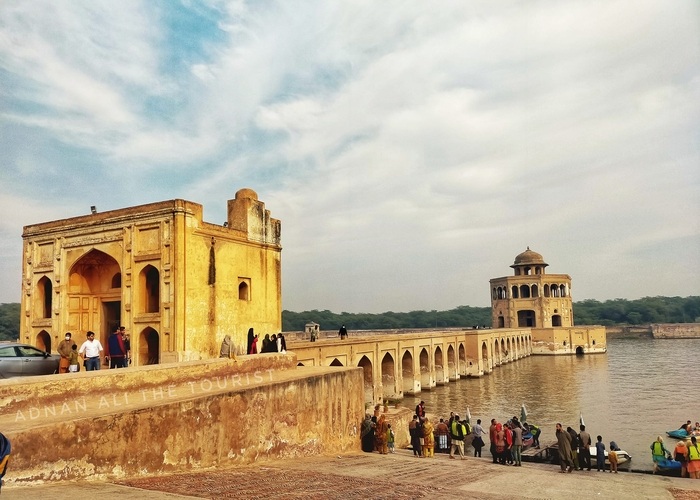
Hiran Minar in Sheikhupura is a beautiful, royal destination, built in the 17th century and located near Lahore. Located near the city of Sheikhupura, it is just 40 kilometers from Lahore, the provincial capital. Built in 1606 by the fourth Mughal king, Jahangir, the monument commemorates his pet deer, Hansraj. You can use the Motorway or the GT Road to explore this famous historical site of Pakistan. The Emperor Jahangir built this historical site for his beloved deer.

The centerpiece is a 100-foot-high tower situated in the middle of a lake, accessible via a bridge. From the top of the tower, visitors can enjoy stunning views of the surrounding area. Hiran Minar is not only a historical monument but also a beautiful picnic spot.

Must Read: Famous Places to Visit in Hunza Valley

  • Entrance Fee: 300 PKR for foreigners and 50 PKR for locals
  • Best time to visit: March – December

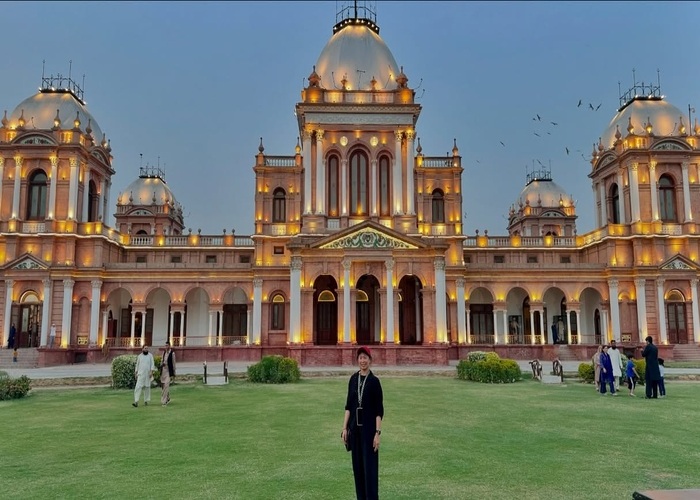
2. Noor Mahal

Noor Mahal - Top Historical Places in Pakistan
Pakistan Historical Places: Noor Mahal

Noor Mahal, located in Bahawalpur, epitomizes beauty and sophistication. It was constructed in 1872 by the Nawab of Bahawalpur during the British colonial period, with city maps and gold coins buried in its foundations. Covering 44,600 square feet (4,140 square meters), it features 32 rooms, including 14 in the basement, six balconies, and five domes. In 1906, Nawab Muhammad Bahaul Khan V added a mosque within the palace, spending 20,000 rupees for its construction.

Located in Bahawalpur, Noor Mahal is perhaps the only city in Pakistan that has preserved its royal heritage, featuring magnificent palaces, libraries, and vintage cars.

Noor Mahal is one of the most majestic places in Pakistan, transporting you back to the royal era of the Nawabs. The last ruler of Bahawalpur was Prince Sadiq Khan Abbasi, commonly known as Nawab Sadiq Khan Abbasi.

Read More: Beautiful Places of Skardu Valley

Visitors need to present identification before entering this historical site. Residents can use their CNIC, while foreign visitors must show their passport to the security staff.

  • Entrance Fee: 1,500 PKR for foreigners and 500 PKR for locals
  • Best time to visit: February – December

Historical Landmarks in Sindh

Chaukandi Tomb

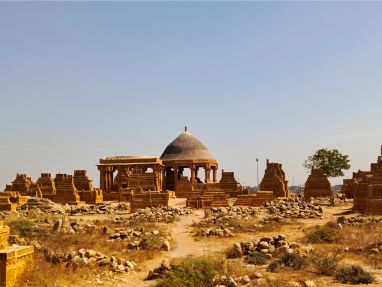
The tombs of Chaukundi are an absolute historical highlight in southern Pakistan. The place is about 30 km from Karachi and very easily accessible. Many sandstone cenotaphs can be found here, which were built predominantly between the 15th and 18th centuries. It was built in the 17th century. There are single graves, graves grouped together, and several graves built under a canopy. The tombs are decorated with geometric and floral motifs, which are also reflected in the tradition of Sind Province’s fabrics. Particularly beautiful is the depiction of jewelry on the graves. Very occasionally, human depictions are also found.

Makli Necropolis

Makli Necropolis/Grave Yard is Pakistan’s UNESCO World Heritage Site, designated in 1981. This is one of the largest ancient funerary sites (Graveyard). It is spread over an area of 9 kilometers in the District Thatta, Pakistani province of Sindh. The site houses around 500,000 to 900000 tombs built over the course of a 450-year period. Makli Necropolis features several large funerary monuments belonging to royalty, various Sufi saints, and esteemed scholars.

Bhambore Fort

Bhambore is the ruins of an ancient city built about 2000 years ago and located on the banks of the Arabian Sea. Ruins of the first mosque in the subcontinent are said to be located at this factual site. Bhambore is easily reached through the National Highway, located about 65 Km from Karachi.

Bhanbore is the same place (also called Debal port in history) where Mohammad Bin Qasim, a General sent by Hujaj Bin Yousuf from Basra, Iraq, landed in 712 AD. He was victorious in the war against the local ruler, Raja Dahir. A romantic story about Sassi, a beautiful local girl, and Punnu, a prince of Makran, is also associated with Bhambore.

Ranikot Fort

Ranikot Fort is a historic fort near Sann in Jamshoro District, Sindh, Pakistan. Ranikot Fort is also known as the “Great Wall of Sindh” and is believed to be the world’s largest fort, with a circumference of approximately 32 kilometers (20 mi). The fort’s ramparts have been compared to the Great Wall of China.

The site was nominated in 1993 by the Pakistan National Commission for UNESCO World Heritage status and has since been on the tentative list of UNESCO World Heritage Sites. The fort is listed as a historical site under the Antiquities Act of 1975, and its subsequent amendments, and is protected.

Ranikot Fort is 90 kilometers (56 mi) north of Hyderabad on the national highway.

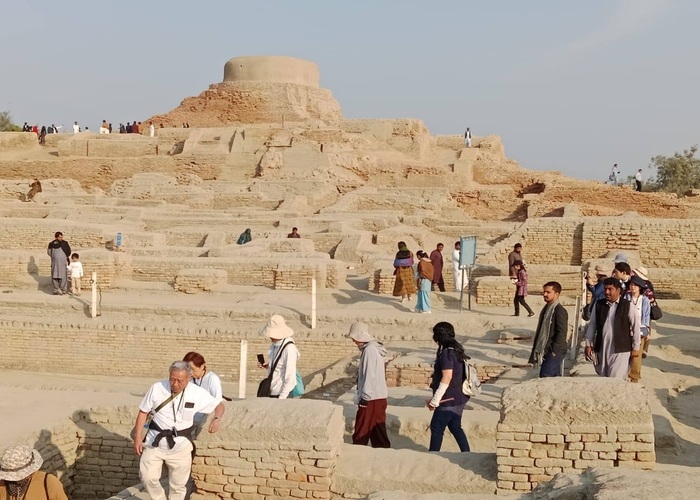
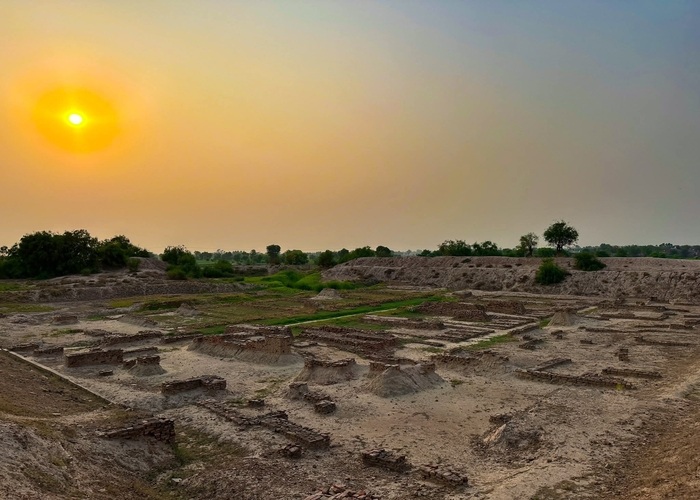
Mohenjo-Daro

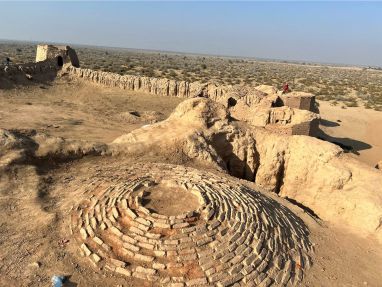
The remarkable ruins of Mohenjo-Daro were first discovered in 1911, with excavations commencing in 1922 and major work being conducted in the 1930s. After 1965, further excavations were halted due to concerns about potential damage to the site. It is estimated that only one-third of the ruins have been revealed, and some believe that merely 10 to 20 percent have been unearthed.

Dating back approximately 5,000 years, Mohenjo-Daro was buried and rebuilt many times before it was lost to history till 1911, when the first excavations around the Buddhist stupa began.

The city was abandoned in the 19th century BC and was rediscovered in 1922. While the site itself is amazing, it serves as a poignant reminder of how, after about 5,000 years, what remains may completely disappear within our generation.

This, the largest settlement of the Indus Valley Civilization, is a truly remarkable historical landmark in Pakistan. The city is divided into three main areas: the affluent colony, the artisan colony, and the soldiers’ colony. The area surrounding the stupa includes an ancient university site.

Indus Valley Civilization

On the other hand, the houses were typically two stories high, with wells, kitchens, and washrooms. Oil lamps at night illuminated the streets, and a sophisticated sewage system ran through them, with covered canals. Dustbins were placed at the corners of each street. The nearby Indus River supplies water to the Great Bath, serving both travelers and the general public.

Walking through Mohenjo-Daro can transport you back to the era of its citizens, some 4,500 years ago. It was one of the largest settlements of the ancient Indus Valley Civilization and one of the world’s earliest major urban centers, contemporaneous with the civilizations of ancient Egypt, Mesopotamia, and Crete.

World’s 2nd-Oldest Civilization

Mohenjo-Daro, located in the Larkana District of the Sindh province in modern-day Pakistan, was built around 2,600 BCE and had a population of approximately 35,000 to 50,000 at its peak. It was one of the main centers of the Indus Valley Civilization until around 1,900 BCE. This remarkable civilization flourished along both banks of the mighty Indus River, from the Himalayas to the Arabian Sea.

  • Entrance Fee: 3,000 PKR for foreigners and 100 PKR for locals
  • Best time to visit: September – April
Mohenjo Daro Ruins - Top Historical Places in Pakistan
Pakistan Historical Places: Mohenjo Daro Ruins

Historical Attractions in Balochistan

Balochistan boasts diverse attractions, each offering a unique experience. Quaid-e-Azam Residency in Ziarat, Hingol National Park, and the historical Gwadar Fort are iconic landmarks.

Quaid-e-Azam Residency

The Quaid-e-Azam Residency in Ziarat, Balochistan, Pakistan, is a significant historical site. It was the summer residence of Quaid-e-Azam Muhammad Ali Jinnah, the founder of Pakistan. The residence is now a national monument and museum housing artifacts and personal belongings of Quaid-e-Azam.

The site is surrounded by well-maintained gardens and offers views of the mountains. As an important landmark in Pakistan’s history, the residency attracts visitors from across the country. It also symbolizes the nation’s struggle for independence and commemorates Quaid-e-Azam’s vision and leadership.

Hingol National Park

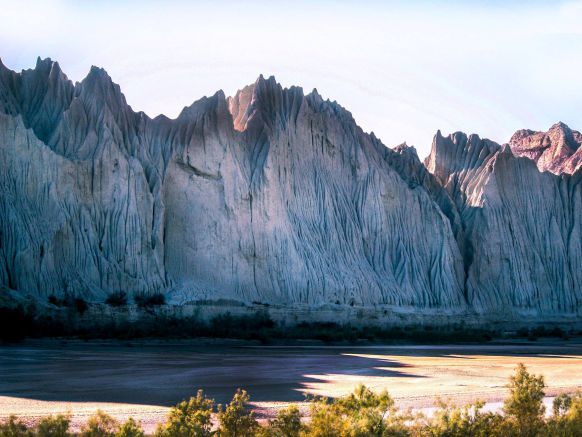
This medieval site, located at the boundary of Lasbela and Gwadar districts in Balochistan province, is a national park with some of the most beautiful beaches in Pakistan, if not the world. People often hear of Sonmiani and Kund Malir beaches, but there is also Golden Beach, a few kilometers beyond Kund Malir, which is beautiful. 

There are also the Hinglaj Mandir, Princess of Hope, and Sphinx, resembling the Egyptian one, all sights to behold. Sadly, the area is undeveloped and not tourist-friendly, which breaks one’s heart. Hingol offers plenty of wildlife and flora for nature lovers. I suggest stopping at some places on your way to Gwadar, which has more amazing sights to see!

Gwadar Fort Omani 

The Gwadar Fort was built during Omani rule. In the mid-18th century, Nasir Khan took control of Gwadar and its surrounding regions after defeating the Gichki Baloch tribe. He then incorporated these territories into the Khanate of Kalat.

Historical Places to Visit in Punjab

Taxila Ruins

Taxila Monastery Ruins - Top Historical Places in Pakistan
Pakistan Historical Places: Taxila Monastery Ruins

The ruins at Taxila were rediscovered in the mid-19th century by the prominent archaeologist Sir Alexander Cunningham. In 1980, UNESCO recognized Taxila as a World Heritage Site, and in 2006, The Guardian named it the top tourist destination in Pakistan.

Nestled in a small town 30 kilometers from Islamabad with well-trodden routes, the ruins of Taxila are a true gem for history and archaeology lovers.

Anyone interested in Alexander the Great or the history of how Buddhism spread through Asia will love a trip to Taxila. The Greco-Buddhist Gandharan civilization is key to understanding how Buddhism moved from India to Asia via Central Asia. Gandharan art, characterized by its Buddhist motifs and Greek-style realism, is truly remarkable.

Taxila is one of the best places to learn about Buddhist history, especially if you have some prior knowledge. The guides are knowledgeable, but they primarily speak the native language.

Located just 2 km from the small but excellent Taxila Museum, the city is truly a wonder. It has three layers of civilization, with two others lying beneath the current city. It showcases contrasts and wonders not just through its monuments but also in the way different religions coexisted, allowing people the freedom to worship and teach their beliefs. This is a valuable concept we could learn from today.

  • Entrance Fee: 2,000 PKR for foreigners and 200 PKR for locals
  • Best time to visit: March – November

Katas Raj Temple

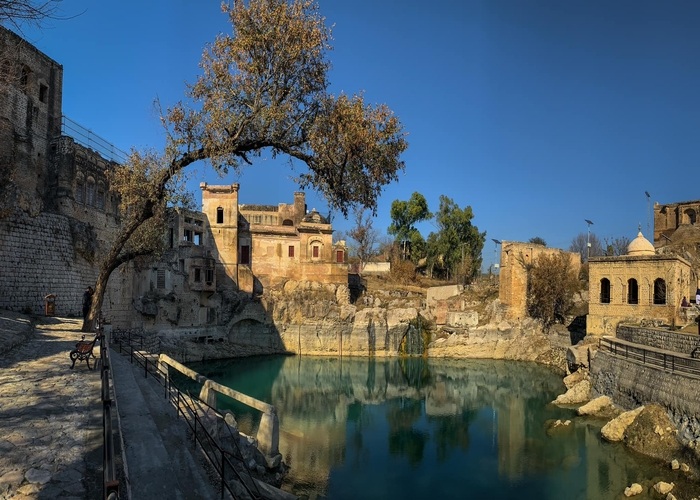
Katas Raj Temple - Top Historical Places in Pakistan
Pakistan Historical Places: Katas Raj Temple

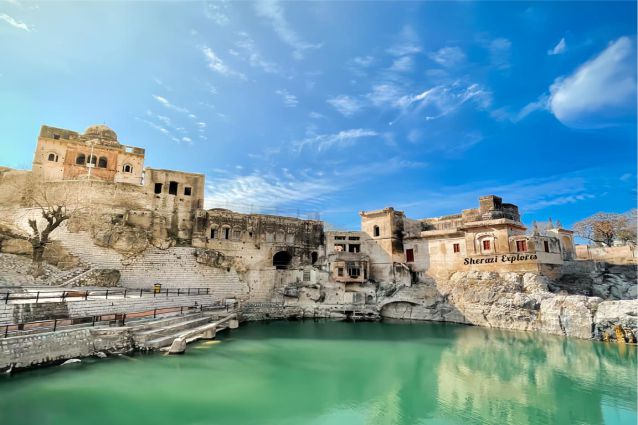
Katas Raj is an ancient Hindu temple complex located in the village of Katas, near Choa Saidanshah in the Chakwal district of Punjab, Pakistan. Katas Raj is a location where time seems to stand still. Surrounded by legends, ancient stones, and tranquil waters, the temples exude a profound spiritual energy.

One Brahmanical tale recounts that Lord Shiva was so grief-stricken over the death of his wife Sati, the daughter of Daksha. His tears fell to the ground and formed two sacred pools: Pushkara, or Pokhar, near Ajmer, and Kataksha, or Katas. The buildings, constructed from saltstone, animal bones, and filtered lentil water, have withstood the test of time for over 2,500 years.

Located in the Pothohar Plateau near Kallar Kahar, at an altitude of 2,000 feet, Katas Raj is a complex of 12 interconnected Hindu temples surrounding a pond named Katas. To reach Katas Raj via the Islamabad-Lahore Motorway (M2), take the exit at Kalar Kahar interchange and travel on Choa Saiden Shah Road, which becomes Kalar Kahar Road after Dalel Pur. It’s a straightforward and well-maintained road.

The pond has an irregular shape, measuring 150 feet in length, with a maximum width of 90 feet on the upper side and 50 feet on the lower side. Other tourist attractions within the Katas Raj temple complex include the Sri Rama Temple, Hanuman Mandir, Sanskrit College, and a Buddhist temple.

Suggested Read: Murree Nathia Gali Tourist Attractions

  • Entrance Fee: No Any (Give a tip to the local Guide)
  • Best time to visit: January – November

Harappa Archaeological Site

Harappa Pakistan - Top Historical Places in Pakistan
Pakistan Historical Places: Harappa

The ancient city of Harappa, which thrived from 3500 BC to 1900 BC, is one of the enormous archaeological sites in present-day Pakistan, associated with the Indus River Valley Civilization. Harappa has been continuously inhabited for over 5,500 years. It was first identified as the ruins of an ancient city in 1826 by James Lewis, a British Army deserter who posed as an American engineer named Charles Masson.

In 1831, Alexander Burnes, an envoy of King William IV, recorded the impressive remains at Harappa during his journey from Multan to Lahore, where he was delivering horses on behalf of the King to Raja Ranjit Singh.

In 1856, British railway engineer William Brunton inadvertently harmed this heritage site by using 5,000-year-old Harappan bricks as ballast (crushed rock placed around railroad tracks) for a 195-kilometer railway line between Sahiwal and Multan.

Alexander Cunningham conducted the first excavations at Harappa from 1856 to 1872. However, the first extensive excavations began in 1920 under John Marshall’s policy. At its peak around 2500 BC, Harappa had an estimated population of 50,000 to 75,000 inhabitants.

Must Read: Historical Places to Visit in Pakistan

The ruins house artifacts dating back to the Bronze Age. The city is believed to have accommodated a population of 23,500 and covered approximately 150 hectares (370 acres). You can find the earliest origins of the Harappan civilization back to the Mehrgarh culture around 6000 BC.

  • Entrance Fee: 500 PKR for foreigners and 70 PKR for locals
  • Best time to visit: February – December

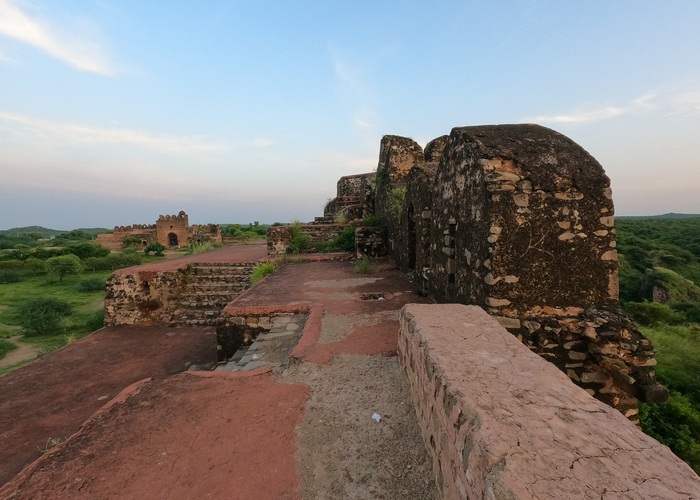
Rohtas Fort

Rohtas Fort - Top Historical Places in Pakistan
Pakistan Historical Places: Rohtas Fort

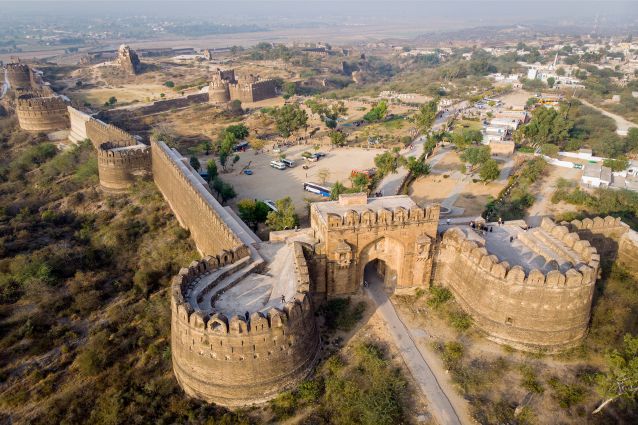
Rohtas Fort, a historical site in Jhelum District, Punjab, Pakistan, stands as a lasting testament to Sher Shah Suri’s architectural vision. This landmark beckons those eager to immerse themselves in the region’s rich history. Experience the architectural heritage in a tranquil, rural setting that deserves your admiration and exploration.

Sher Shah Suri’s legacy endures through Rohtas Fort, one of the most impressive remnants near Jhelum. Visiting unlocks a unique window into the era’s history. Without urgent government restoration efforts, sections of this heritage will deteriorate—your interest and advocacy can help preserve it for future generations.

In line with its defensive purpose, the external walls, ranging from 10 to 18 meters in height, exemplify a well-fortified architectural structure.

Rohtas Fort served as a strategic garrison in the 16th century, built over eight years and featuring imposing walls that circumscribed nearly 5 kilometers. Imagine witnessing a site capable of accommodating 30,000 men—a rare opportunity to experience the era’s military prowess and significance.

Positioned strategically, the historic Shahrah-e-Azam runs adjacent to the fort’s outer northern wall, with remnants of the road still visible as pavements and rough paths. Qila Rohtas is located in a gorge approximately 16 kilometers northwest of Jhelum and 9 kilometers from Dina, situating the fort within the region’s historic landscape.

The fort is situated on a hill at the confluence of the Kahan River and the Parnal Khas stream, which flows east toward the Tilla Jogian Range. Rohtas Fort rises approximately 91 meters above its surroundings, with an elevation of 810 meters above sea level, and covers an area of 51,100 square meters.

Gates of Fort

The fort has 12 gates, including small entrances:

  1. Sohail Gate
  2. Shah Chand Wali Gate
  3. Kabuli Gate
  4. Shishi Gate
  5. Langar Kahani Gate
  6. Talaqi Gate
  7. Mori/Kashmiri Gate
  8. Khawas Kahani Gate
  9. Gatali Gate
  10. Tulla Mori Gate
  11. Pippli Gate
  12. Sar Gate

Must Read: Beautiful Visit Places in Swat Valley

Suggested Read: Top Places to Visit in Kumrat Valley

  • Entrance Fee: 500 PKR for foreigners and 100 PKR for locals
  • Best time to visit: March – November

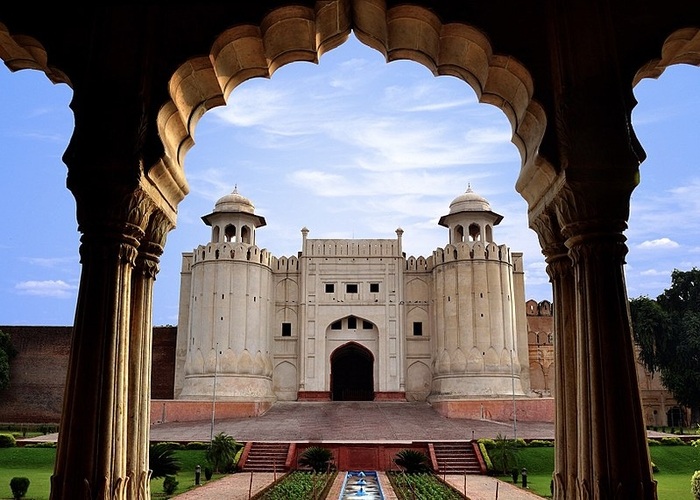
Lahore Fort

Lahore Fort - Top Historical Places in Pakistan
Pakistan Historical Places: Lahore Fort

Built in 1566 by Emperor Akbar, the fort underwent various modifications by later rulers, adding to its historical significance. Inside, visitors can explore a royal palace, gardens, fountains, and steps designed for elephant hooves. There are approximately 21 historical monuments within Lahore Fort, the most beautiful being the Sheesh Mahal, built during the reign of Mughal Emperor Shah Jahan in 1631-32 AD.

Lahore Fort, a UNESCO World Heritage site, is a stunning historical gem located in Lahore, Pakistan. The fort showcases a blend of Mughal architecture, showing intricate carvings, beautiful gardens, and grand halls that reflect the era’s opulence. Some highlights include the Nawakha pavilion, featuring a precious stone-incrusted ceiling and walls, and the majestic Picture Wall, adorned with mosaics, faience, and frescoed scenes.

Dating back to the early 16th century, this citadel-like fort is said to have been “rebuilt” throughout the 17th century, with various structures added in different architectural styles. This rich assortment of structures contributed to the designation of the whole ensemble as a UNESCO World Heritage site.

  • Entrance Fee: 1,000 PKR for foreigners and 100 PKR for locals
  • Best time to visit: March – November

Must Read: Must Visit Places in Azad Kashmir

Badshahi Masjid

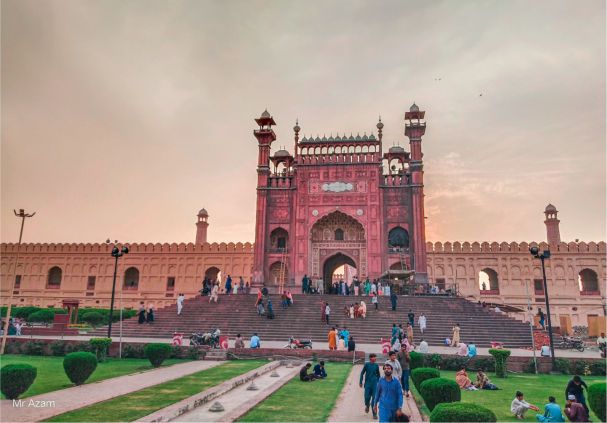
The Badshahi Mosque stands as one of Lahore’s most significant historical landmarks, exemplifying Mughal architectural excellence and cultural heritage. Its atmosphere becomes particularly striking in the evening, when illumination accentuates its features. Visitors interested in Lahore’s history may find it straightforward to access the mosque, as the area is generally easy to traverse on foot.

Completed in 1673 during the reign of Mughal Emperor Aurangzeb, the mosque is located just north of Lahore’s old city. Its robust, imposing structure reflects Aurangzeb’s focus on military organization, with less emphasis on intricate ornamentation, thereby contributing to its unique architectural identity.

The three domes, eight minarets, rectangular courtyard, and gate building together highlight the architectural skill demonstrated in its construction.

  • Entrance Fee: Free of cost
  • Best time to visit: All year round

Historical Points in Gilgit Baltistan

Altit Fort

Altit Fort, in the Hunza Valley of Gilgit-Baltistan, Pakistan, is a significant example of historic architecture dating back over 900 years. It sits atop a rocky hilltop overlooking the Hunza River, reflecting the region’s cultural heritage and strategic role along the Silk Road. One of the oldest surviving forts in the area, Altit Fort was built in the 11th century by the Baltit people, ancestors of today’s rulers. For a time, it served as a stronghold for various rulers and clans, reflecting the region’s dynamic history.

Baltit Fort

Baltit Fort in Karimabad, the main town of Hunza, offers an amazing experience. The fort is well-maintained and managed; moreover, the tour guides are on hand to assist and brief you on the structure’s history and significance. It’s a good experience for physically fit people. It’s approximately a 30-minute, 300-meter trek (a bit steep) to the hilltop, where the fort stands, but the view from the top is breathtaking and worth it. Do have a glimpse of the fort if you are interested in history and geopolitics.

Kharpocho Fort Skardu

The fort was constructed between 1490 and 1505 by Ali Sher Khan Anchan. The Maqpoon dynasty of Skardu originated in the early 3rd century AD, after a long period of Tibetan rule. One account traces the dynasty back to a local ‘Fakir’ Maqpoon Bokha. Another account mentions Ibrahim Shah of Kashmir, who established his rule in the region and founded the Maqpoon dynasty.

After the fort was completed in 1505, the prince shifted the capital of Skardu from Shigari Bala to Kharpocho. The fort requires about a 20-minute hike up the mountain to reach, but it’s worth it. It overlooks the junction where the rivers meet and offers great views of the valley.

Shigar Palace Skardu

The Shigar Palace, also known as Fong Khar (The Palace on the Rock), is an old palace located in the town of Shigar, Gilgit-Baltistan, Pakistan. Situated about 30 kilometers (19 mi) from Skardu, it lies on the route to Baltoro Glacier and K2, the latter being the second-highest mountain on Earth.

Khaplu Palace

Khaplu Palace was built in 1840 by Yabgo Raja Daulat Ali Khan and is considered the best-preserved royal residence in Baltistan, a region in northeastern Pakistan. Kashmiri and Balti craftsmen helped build the palace, blending local architecture with styles from Tibet, Kashmir, Ladakh, and Central Asia.

According to local stories, the palace site was chosen by rolling a large stone down a nearby cliff and building where it came to rest. For more than a century, it served as the home of the local ruler, and his family stayed there even after their kingdom ended. The last Raja of Khaplu lived in the palace until his death in 1983, after which the building started to fall into disrepair.

Manthal Buddha Rock

Buddha Rock Manthal sits just outside Skardu, near Satpara Road. This large granite rock features an 8th-century Buddha carving. This site is historically significant and recognized as a heritage landmark. Buddhism thrived in this area from the 8th to 10th centuries, and you can find many other related carvings nearby. Buddha Rock is seen as the best example. The carving shows the Buddha, two future Buddhas (Metreyias), and 20 disciples (Bodhisattvas). Visiting the Buddha is an easy walk, but if you start from town, expect a bit of an uphill climb.

Historical Sites in KPK

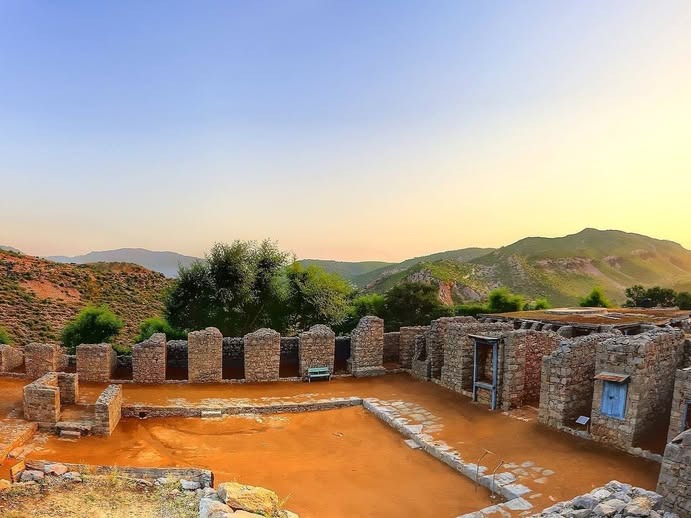
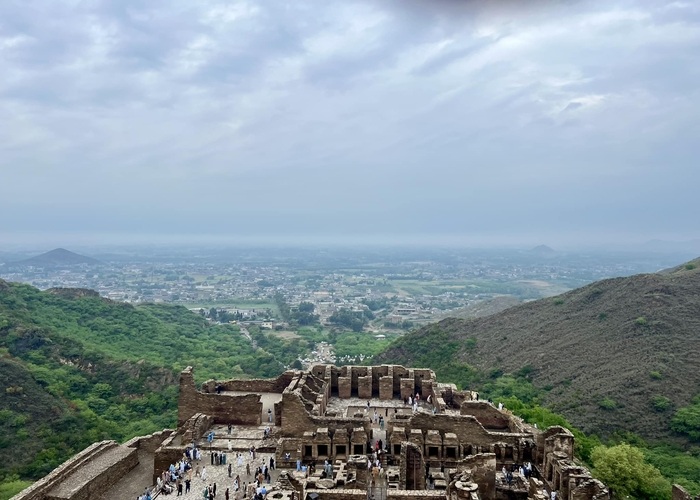
Takht i Bahi - Top Historical Places in Pakistan
Pakistan Historical Places: Takht i Bahi

Takht-i-Bahi (The Throne of Bahi) is one of the most well-preserved Buddhist monasteries in Pakistan. Located 17 kilometers from Mardan on a hill, this cloister was founded in the 1st century and remained an essential Buddhist educational and cultural center for many centuries. It is 165 kilometers northwest of Pakistan’s capital, Islamabad, in the Mardan District.

Takht-i-Bahi, which translates to The Spring Throne, was discovered in 1836 and was listed as a UNESCO World Heritage Site in 1980. Local legend suggests it is after a nearby spring. With an elevation of 500 feet above the hill, the site has been suitable for this ancient monastery for centuries.

Takht-i-Bahi is unique in its extensive layout and various areas, including monk cells, halls, meeting rooms, and different stupas. It is situated on a slight elevation, surrounded by hills, offering an extraordinary view of the landscape. While the main sculptures have relocated to various museums, one can still imagine the beauty of the site during its prime.

Inside the hermitage, the meditation cells where worshippers practiced are a must-visit historical site in Pakistan, along with the ruins of conference rooms and classrooms. The site features a central Stupa Court, a votive stupas court, and a group of three stupas.

Must Read: Must Visit Places in Naran Kaghan

You can divide this grand ensemble of structures into four primary areas:

The Stupa Court:

It contains many stupas of mostly similar sizes, located in the central courtyard.

The Monastery: 

This sanctuary features assembly halls, dining areas, a courtyard, and two-story, impressive living quarters.

The Temple Complex: 

This region comprises stupas similar to those in the Stupa Court, built later on a hill higher than the original Stupa Court, as well as a courtyard and living partitions.

The Tantric Complex: 

This complex features numerous meditation cells with low openings and dim interiors. Located on the opposite hill from the Stupa Court.

Historical records indicate that the monastery was in constant use until around the 7th century, after which documentation becomes unclear.

  • Entrance Fee: 300 PKR for foreigners and 50 PKR for locals

Best Time to Visit: The busiest time to visit the monastery is between September and April, when the weather is more temperate.

Make My Trip


✓ We assure the privacy of your contact data.
✓ This data will only be used by our team to contact you and no other purposes.

More Places to Visit in Pakistan

Historical places in Lahore
Top 10 Best Historical Places of Lahore in 2026
March 31, 2026
Tourist attractions in Karachi with Family
Best Things to do in Visit Karachi with Family 2026
December 3, 2025
Best places while visiting Peshawar
Family Things to do in Peshawar 2026 Must Visit Places
December 3, 2025
Lahore Tourist Attraction
Top 10 Best Things to do in LAHORE with Family
November 4, 2025
Attractions to visit in Chitral
Epic Things to do in Chitral Kalash Valley 2026
November 4, 2025
Tourist Attractions in Islamabad
Top 10 Family-Friendly Tourist Attractions in Islamabad
October 20, 2025
Lakes of Pakistan
Top 40+ Best Lakes in Pakistan 2026 Ultimate Travel Guide
October 11, 2025
Swat Kalam Best Time
Best Time You LOVE to Explore Swat Kalam Malam Jabba
August 6, 2025
Kumrat Valley Tourist Attraction
Top 10 Best Things to do in KUMRAT VALLEY 2026
July 10, 2025
Cheap Country to Visit
Cheapest Countries to Visit from Pakistan
May 14, 2025
Best Places to visit in Nathia Gali
Top 10 Nathia Gali Tourist Attractions 2026 Picnic Points
May 5, 2025
Balochistan Tourist Attractions
10+ The Best Things to do When Visit Balochistan 2026
February 26, 2025
Hyderabad Tourist Attractions
Top 10+ The Best Things to Do in Hyderabad 2026
January 24, 2025
Muzaffarabad Tourist Attractions
Top 10+ The Best Things to Do in Muzaffarabad 2026
January 24, 2025
Multan Tourist Attractions
Top 10+ The Best Things to Do in Multan 2026
January 24, 2025