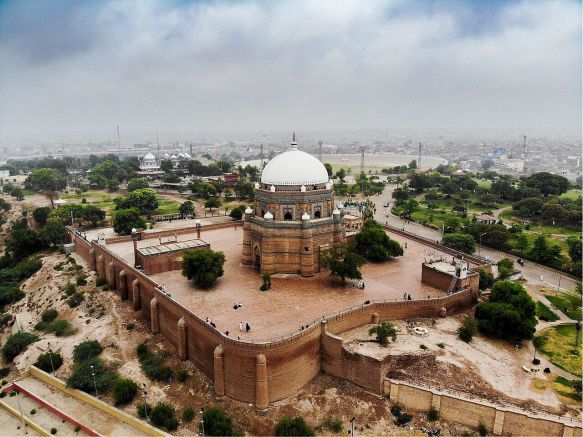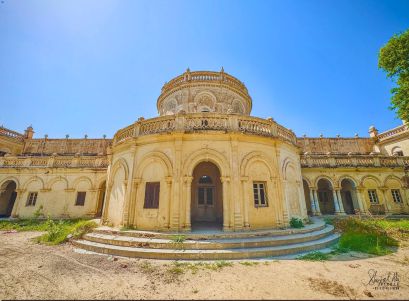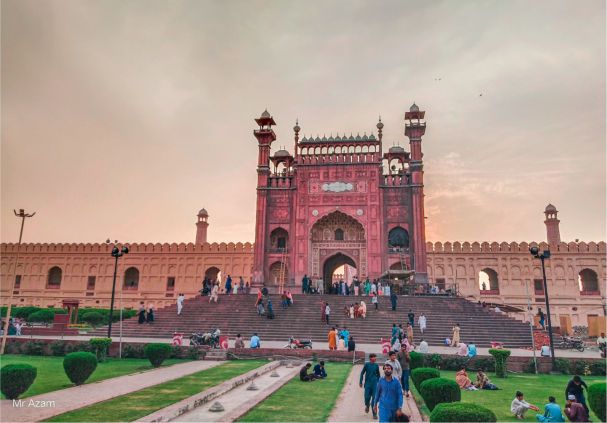

Nestled in the northwest corner of the Walled City of Lahore, adjacent to the Badshahi Mosque, Lahore Fort is an iconic historical landmark. Originally rebuilt during the reign of Mughal Emperor Akbar in 1566, it underwent further expansions under the reigns of Jahangir, Shah Jahan, and Aurangzeb.
This UNESCO World Heritage Site once served as a royal residence for Mughal emperors. Its architectural beauty showcases a stunning blend of Islamic, Persian, and Indian styles.
Highlights include the dazzling Sheesh Mahal (Palace of Mirrors), the elegant Naulakha Pavilion, the grand Alamgiri Gate, and the vibrant Picture Wall, adorned with intricate tile mosaics.
With its underground chambers, audience halls, and impressive gates, the fort invites visitors on a captivating journey into the opulence of the Mughal era.
Standing majestically across from Lahore Fort, the Badshahi Mosque exemplifies Mughal religious architecture and is a revered historical site in Lahore. Built by Emperor Aurangzeb in 1671, it was once the largest mosque in the world.
Constructed from striking red sandstone and embellished with white marble inlays, the mosque’s expansive courtyard can accommodate over 55,000 worshippers. Its towering minarets, intricate calligraphy, and grand domes create a breathtaking visual and spiritual experience.
Within its walls, a museum houses relics of Prophet Muhammad (PBUH), enhancing its religious and cultural significance. The mosque’s impressive stature and rich history make it best historical landmark to visit in Lahore.
Located on the Grand Trunk Road northeast of Lahore, the Shalimar Garden is a stunning example of Mughal landscape design and one of Lahore’s most enchanting historical sites.
Commissioned by Shah Jahan in 1641, the garden embodies the Persian concept of paradise gardens, arranged into three terraces with over 400 fountains, marble pavilions, and flowing water channels. Once a tranquil retreat for emperors, it continues to reflect the symmetry, harmony, and serenity characteristic of Mughal garden aesthetics.
The ancient trees, vibrant floral arrangements, and soothing water features create a picturesque setting that transports visitors back to the Mughal Royal Era.
Situated in Iqbal Park, near the Walled City, Minar-e-Pakistan is a modern monument rich in historical significance and a key attraction among Lahore’s historical sites. It marks the location where the All-India Muslim League adopted the Lahore Resolution on March 23, 1940—a crucial step toward the creation of Pakistan.
Its design reflects a fusion of Islamic and modern architectural elements, standing tall at 70 meters with inscriptions of the resolution in several languages. The surrounding gardens and pools add tranquility, while the monument itself serves as a powerful symbol of national identity, unity, and independence.
Located in Shahdara Bagh, across the Ravi River, the Tomb of Jahangir offers a serene and majestic glimpse into Mughal grandeur, standing among the most exquisite historical sites in Lahore. Constructed in 1637 by his son Shah Jahan, this tomb is set within a lush Charbagh-style garden.
Built from red sandstone and marble, it is adorned with beautiful pietra dura floral patterns and intricate frescoes. The central white marble cenotaph is inscribed with verses from the Quran, and four minarets rise at its corners. Nearby lie the tombs of Jahangir’s wife, Noor Jahan, and his brother-in-law, Asif Khan, making this area an important Mughal necropolis.
Situated within the vibrant Walled City near Delhi Gate, the Wazir Khan Mosque is a remarkable treasure among Lahore’s historical gems. Commissioned by Wazir Khan, the governor under Shah Jahan, the mosque was completed in 1641 and is renowned for its stunning “kashi kari” tile mosaic work and intricate frescoes.
The mosque features a courtyard, prayer halls, and minarets adorned with elaborate floral and geometric designs, Quranic calligraphy, and vivid colors. This architectural marvel of Mughal decorative art provides spiritual tranquility and artistic inspiration amidst the bustling bazaar that surrounds it.
Located between the Badshahi Mosque and Lahore Fort, Hazuri Bagh and its central baradari (pavilion) offer a fascinating glimpse into the Sikh era of Lahore’s history. Built in 1818 by Maharaja Ranjit Singh to commemorate the acquisition of the Koh-i-Noor diamond, the white marble baradari originally reached three stories tall before an earthquake reduced its height.
The garden, designed in classic Mughal style, complements the surrounding architecture and serves as a peaceful gathering place. This location stands as a picturesque testament to the intertwined Mughal, Sikh, and colonial histories.
One of Lahore’s most iconic landmarks, Chauburji stands proudly on Multan Road, remnants of a grand Mughal garden established in 1646. True to its name, the gateway features four distinct minarets, each showcasing intricate tile work and inscriptions.
Although the garden it once led to has vanished, the structure continues to symbolize Mughal architectural sophistication. Its blend of floral motifs, calligraphy, and pointed arches captivates visitors and scholars alike, preserving the memory of Lahore’s verdant past.
Delhi Gate, the eastern entrance to the historic Walled City, was once one of thirteen gates that opened up Mughal-era Lahore. Facing towards Delhi, it served as a vital passage for travelers and traders. Now restored as part of the Walled City of Lahore Authority’s conservation efforts, the gate functions as a starting point for heritage trails that explore the city’s ancient roots.
Surrounding the gate are bustling bazaars, historic mosques, and beautifully restored havelis, creating an immersive experience of Lahore’s urban and cultural journey. Passing through Delhi Gate feels like stepping into a living museum of South Asian heritage.
Exploring the historical sites in Lahore is more than just a visual feast; it’s a deep dive into the rich cultural, political, and spiritual tapestry of the subcontinent. Whether you’re wandering through Mughal gardens, admiring intricate frescoes, or standing in the footsteps of emperors, each site offers a profound connection to our history.
So, if you’re a history enthusiast or an adventurous traveler, Lahore welcomes you with open arms. These monuments, mosques, and tombs are more than mere relics; they are timeless guardians of our shared heritage.