Pakistan has a layered past and a vibrant cultural heritage. It has seen many glorious rulers; the area was even home to ancient civilisations, giving it its rich history. Many historic sites in Pakistan showcase its rich heritage. So, if you are a history buff, you will not want to miss out on this country, which provides you with a clear insight into the fascinating South Asian history.
It is just a small glimpse of the seemingly endless array of historical places that Pakistan has to offer. The remarkable diversity of Pakistan’s inhabitants has left a substantial cultural, religious, and ethnic legacy for contemporary society to explore.
Pakistan is home to the oldest historical heritage sites in the ancient world. Its history reaches back to the earliest civilizations, predating even the rise of the Indus Valley. Additionally, UNESCO World Heritage Sites recognize their many ancient monuments.
Pakistan is an inviting historical travel destination for tourists due to its cultural history and heritage. Each year, it attracts visitors from all around the globe.

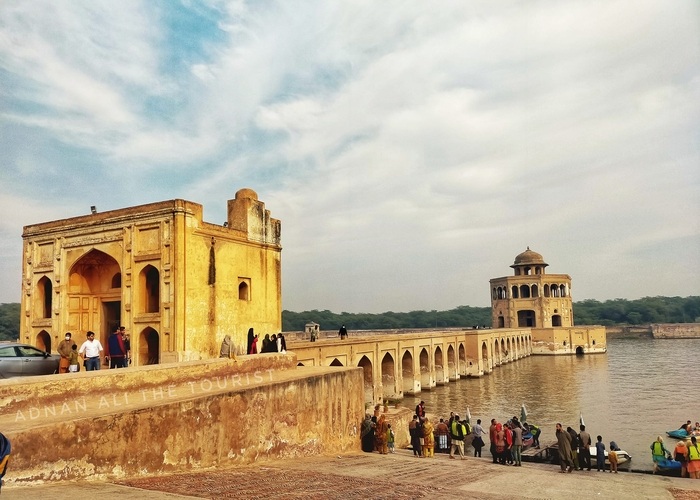
Hiran Minar in Sheikhupura is a beautiful royal destination to visit, constructed during the 17th century, located not far from Lahore. Located near the city of Sheikhupura, it is just 40 kilometers from Lahore, the provincial capital. Built in 1606 by the fourth Mughal king, Jahangir, the monument commemorates his pet deer, Hansraj. You can use the Motorway or the GT Road to explore this famous historical site. The Emperor, Jahangir, built this historical site for his beloved deer.
The centerpiece is a 100-foot-high tower situated in the middle of a lake, accessible via a bridge. From the top of the tower, visitors can enjoy stunning views of the surrounding area. Hiran Minar is not only a historical monument but also a beautiful picnic spot.
Must Read: Famous Places to Visit in Hunza Valley
Despite these issues, Hiran Minar is worth a visit. Many people come here for picnics, and it’s a peaceful location that offers a great environment for artists to create beautiful paintings.
Visitors can enjoy boating and paddle-boating as well as some sightseeing and family time while indulging in ice cream. However, there are no restaurants on-site, so it’s advisable to bring your food before you go. This is a lovely place for families, especially with children.

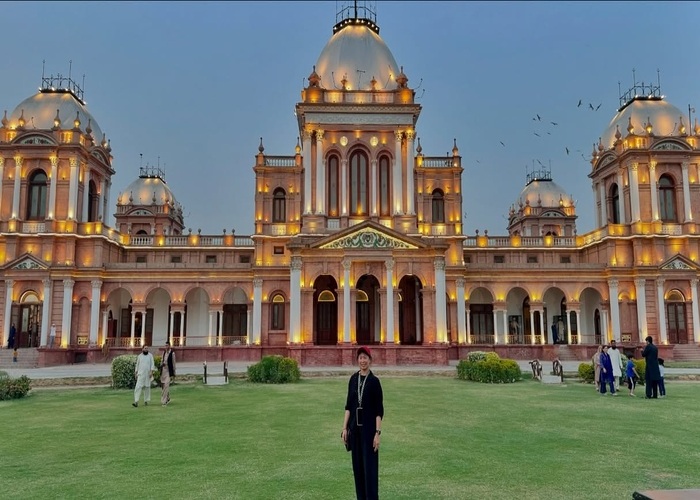
Noor Mahal, located in Bahawalpur, epitomizes beauty and sophistication. It was constructed in 1872 by the Nawab of Bahawalpur during the British colonial period, with maps of the city and gold coins buried in its foundations. Covering 44,600 square feet (4,140 square meters), it features 32 rooms, including 14 in the basement, six balconies, and five domes. In 1906, Nawab Muhammad Bahaul Khan V added a mosque within the palace, spending 20,000 rupees for its construction.
Located in Bahawalpur, Noor Mahal is perhaps the only city in Pakistan that has preserved its royal heritage, featuring magnificent palaces, libraries, and vintage cars.
Noor Mahal is one of the most majestic places in Pakistan, transporting you back to the royal era of the Nawabs. The last ruler of Bahawalpur was Prince Sadiq Khan Abbasi, commonly known as Nawab Sadiq Khan Abbasi.
Read More: Beautiful Places of Skardu Valley
Visitors need to present identification before entering this historical site. Residents can use their CNIC, while foreign visitors must show their passport to the security staff.

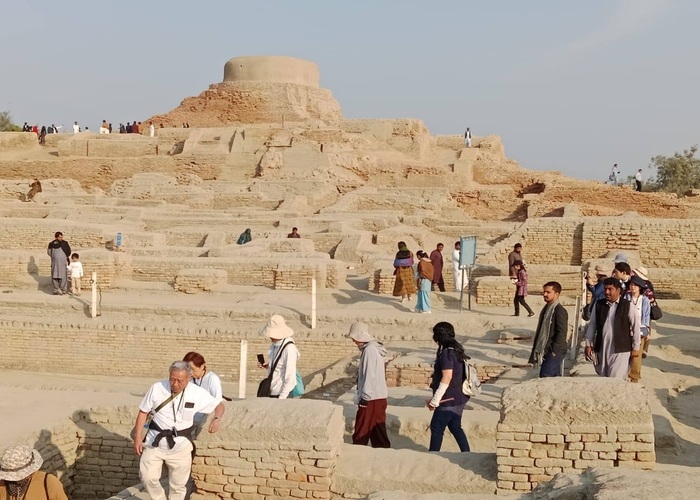
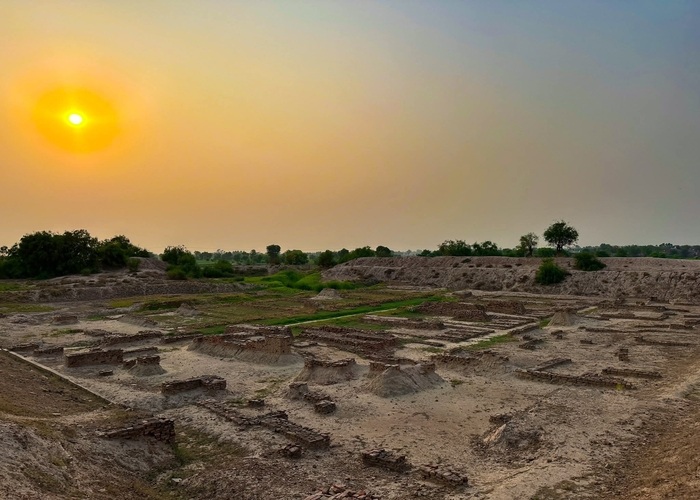
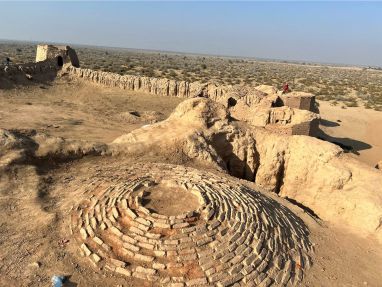
The remarkable ruins of Mohenjo-Daro were first discovered in 1911, with excavations commencing in 1922 and major work being conducted in the 1930s. After 1965, further excavations were halted due to concerns about potential damage to the site. It is estimated that only one-third of the ruins have been revealed, and some believe that merely 10 to 20 percent have been unearthed.
Dating back approximately 5,000 years, Mohenjo-Daro has been buried and rebuilt many times before it was lost to history till 1911, when the first excavations around the Buddhist stupa began.
The city was abandoned in the 19th century BC and was rediscovered in 1922. While the site itself is amazing, it serves as a poignant reminder of how, after about 5,000 years, what remains may completely disappear within our generation.
This, the largest settlement of the Indus Valley Civilization, is truly remarkable. The city is divided into three main areas: the affluent colony, the artisan colony, and the soldiers’ colony. The area surrounding the stupa includes an ancient university site.
On the other hand, the houses were typically two stories high, featuring water wells, kitchen areas, and washrooms. Oil lamps at night illuminated the streets, and a sophisticated sewage system ran through them, with covered canals. Dustbins were placed at the corners of each street. Nearby Indus River supplies the water, serving both travelers and the general public for the Great Bath.
Walking through Mohenjo-Daro can transport you back to the era of its citizens, some 4,500 years ago. It was one of the largest settlements of the ancient Indus Valley Civilization and one of the world’s earliest major urban centers, contemporaneous with the civilizations of ancient Egypt, Mesopotamia, and Crete.
Mohenjo-Daro, located in the Larkana District of the Sindh province in modern-day Pakistan, was built around 2,600 BCE and had a population of approximately 35,000 to 50,000 at its peak. It was one of the main centers of the Indus Valley Civilization until around 1,900 BCE. This remarkable civilization flourished along both banks of the mighty Indus River, from the Himalayas to the Arabian Sea..

The ruins at Taxila were rediscovered in the mid-19th century by the prominent archaeologist Sir Alexander Cunningham. In 1980, UNESCO recognized Taxila as a World Heritage Site, and in 2006, The Guardian named it the top tourist destination in Pakistan.
Nestled in a small town 30 kilometers from Islamabad with well-trodden routes, the ruins of Taxila are a true gem for history and archaeology lovers.
Anyone interested in Alexander the Great or the history of how Buddhism spread through Asia will love a trip to Taxila. The Greco-Buddhist Gandharan civilization is key to understanding how Buddhism moved from India to Asia via Central Asia. Gandharan art, characterized by its Buddhist motifs and Greek-style realism, is truly remarkable.
Taxila is one of the best places to learn about Buddhist history, especially if you have some prior knowledge. The guides are knowledgeable, but they primarily speak the native language.
Located just 2 km from the small but excellent Taxila Museum, the city is truly a wonder. It has three layers of civilization, with two others lying beneath the current city. It showcases contrasts and wonders, not just through its monuments, but also in the way different religions coexisted, allowing people the freedom to worship and teach their beliefs. This is a valuable concept we could learn from today.

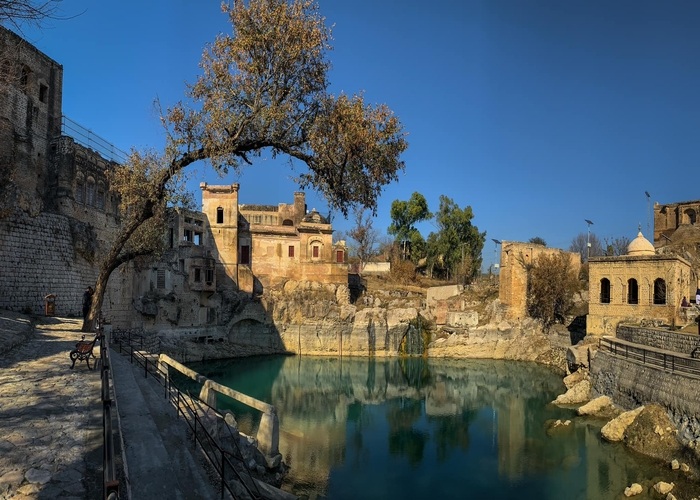
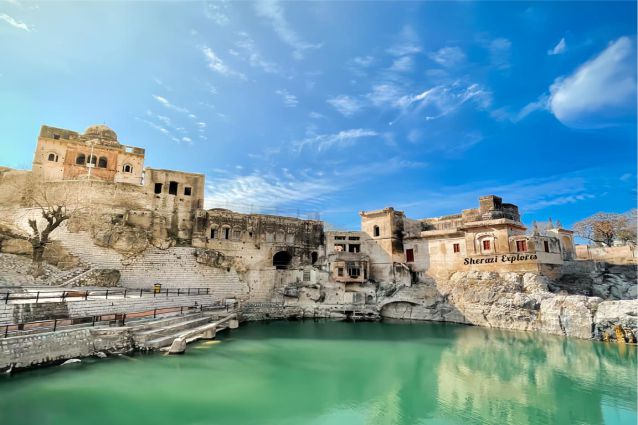
Katas Raj is a Hindu temple complex located in Katas village, near Choa Saidanshah in Chakwal district, Punjab, Pakistan. Katas Raj is a location where time seems to stand still. Surrounded by legends, ancient stones, and tranquil waters, the temples exude a profound spiritual energy.
One Brahmanical tale recounts that Lord Shiva was so grief-stricken over the death of his wife Sati, the daughter of Daksha. His tears fell to the ground and formed two sacred pools: Pushkara or Pokhar near Ajmer, and Kataksha or Katas. The buildings, constructed from saltstone, animal bones, and filtered lentil water, have withstood the test of time for over 2,500 years.
Located in the Pothohar Plateau near Kallar Kahar, at an altitude of 2,000 feet, Katas Raj is a complex of 12 interconnected Hindu temples surrounding a pond named Katas. To reach Katas Raj via the Islamabad-Lahore Motorway (M2), take the exit at Kalar Kahar interchange and travel on Choa Saiden Shah Road, which becomes Kalar Kahar Road after Dalel Pur. It’s a straightforward and well-maintained road.
The pond has an irregular shape, measuring 150 feet in length, with a maximum width of 90 feet at the upper side, and 50 feet at the lower side. Other tourist attractions within the Katas Raj temple complex include the Sri Rama Temple, Hanuman Mandir, Sanskrit College, and a Buddhist temple.
Suggested Read: Murree Nathia Gali Tourist Attractions

The ancient city of Harappa, which thrived from 3500 BC to 1900 BC, is one of the enormous archaeological sites in present-day Pakistan, associated with the Indus River Valley Civilization. Harappa has been continuously inhabited for over 5,500 years. It was first identified as the ruins of an ancient city in 1826 by James Lewis, a British Army deserter who posed as an American engineer named Charles Masson.
In 1831, Alexander Burnes, an envoy of King William IV, recorded the impressive remains at Harappa during his journey from Multan to Lahore, where he was delivering horses on behalf of the King to Raja Ranjit Singh.
In 1856, British railway engineer William Brunton inadvertently harmed this heritage site by using 5,000-year-old Harappan bricks as ballast (crushed rock placed around railroad tracks) for a 195-kilometer railway line between Sahiwal and Multan.
Alexander Cunningham conducted the first excavations at Harappa from 1856 to 1872. However, the first extensive excavations began in 1920 under John Marshall’s policy. At its peak around 2500 BC, Harappa had an estimated population of 50,000 to 75,000 inhabitants.
Must Read: Historical Places to Visit in Pakistan
The ruins house artifacts dating back to the Bronze Age. The city is believed to have accommodated a population of 23,500 and covered an area of approximately 150 hectares (370 acres). You can find the earliest origins of the Harappan civilization back to the Mehrgarh culture around 6000 BC.

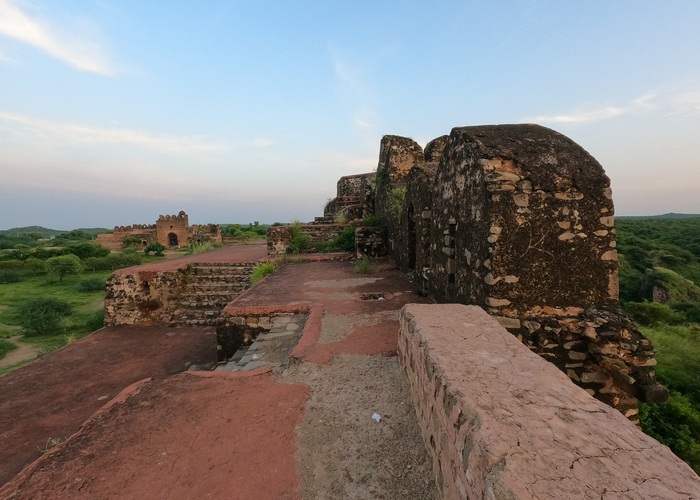
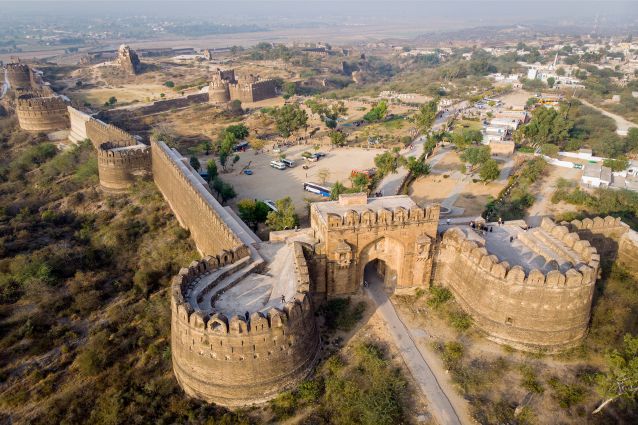
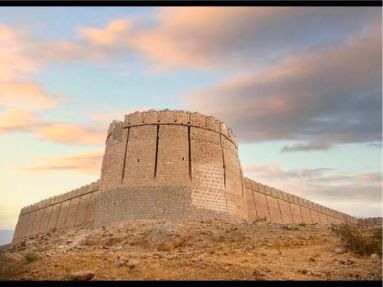
Rohtas Fort is a historical site located in Jhelum District, Punjab, Pakistan. Sher Shah Suri built this fort, a renowned monarch famous for his architectural skills. It is a beautiful place to visit for a glimpse into rich history. If anyone wants to escape the chaos of city life and enjoy a stunning piece of art, this is the place to visit.
Sher Shah Suri constructed one of the splendid forts still standing, albeit partially, near the city of Jhelum. Here, you can immerse yourself in history and feel as though you are living in that era. Unfortunately, the government is not paying enough attention to its renovation, and parts of the bastion are crumbling day by day.
The fort has 12 gates, including small entrances:
The external walls range from 10 to 18 meters high and showcase a perfectly fortified structure—a place truly worth visiting.
Rohtas looked like a garrison Fort to subdue tribes in Northern Punjab during the 16th century. It took eight years to complete, boasting a total circumference of around 5 km and the capacity to hold up to 30,000 men.
The historic Shahrah-e-Azam runs adjacent to the outer northern wall of the fort, with the remains of the road still visible on the ground as pavements and rough paths. Qila Rohtas is situated in a gorge approximately 16 km northwest of Jhelum and 9 km from Dina.
It is on a hill where the small, rainy Kahan River meets another stream called Parnal Khas, which then turns east toward the Tilla Jogian Range. It stands about 300 feet (91 m) above its surroundings, reaching an elevation of 2,660 feet (810 m) above sea level and covering an area of 12.63 acres (51,100 m²).
Must Read: Beautiful Visit Places in Swat Valley
Suggested Read: Top Places to Visit in Kumrat Valley
These are some of the most well-known historical attractions in Pakistan. You should not miss the opportunity to visit this fortress to appreciate its ancient towers and architectural beauty. To escape the usual hustle and bustle of city life, make sure to visit this famous fort in Pakistan.

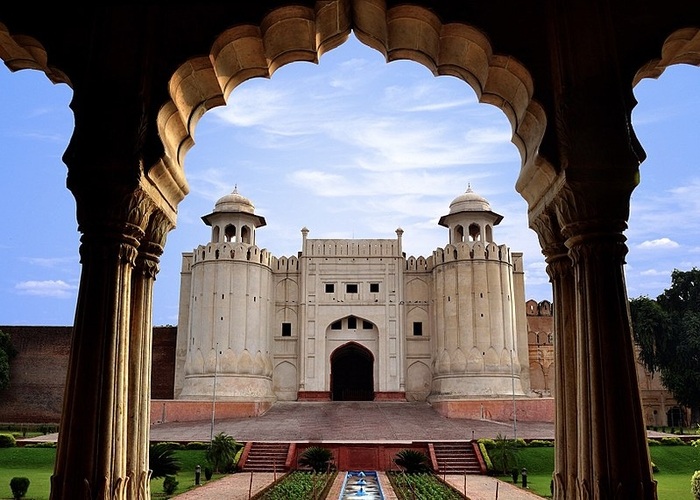
Built in 1566 by Emperor Akbar, the fort underwent various modifications by later rulers, adding to its historical significance. Inside, visitors can explore a royal palace, gardens, fountains, and steps designed for the hooves of elephants. There are approximately 21 historical monuments within Lahore Fort, with the most beautiful being the Sheesh Mahal, built during the reign of Mughal Emperor Shah Jahan in 1631-32 AD.
Lahore Fort, a UNESCO World Heritage site, is a stunning historical gem located in Lahore, Pakistan. The fort showcases a blend of Mughal architecture, featuring intricate carvings, beautiful gardens, and grand halls that reflect the opulence of the era. Some highlights include the Nawakha pavilion, featuring a precious stone-incrusted ceiling and walls, and the majestic Picture Wall, adorned with mosaics, faience, and frescoed scenes.
Dating back to the early 16th century, this citadel-like fort is said to have been “rebuilt” throughout the 17th century, with various structures added in different architectural styles. This rich assortment of structures contributed to the designation of the whole ensemble as a UNESCO World Heritage site.
Must Read: Must Visit Places in Azad Kashmir

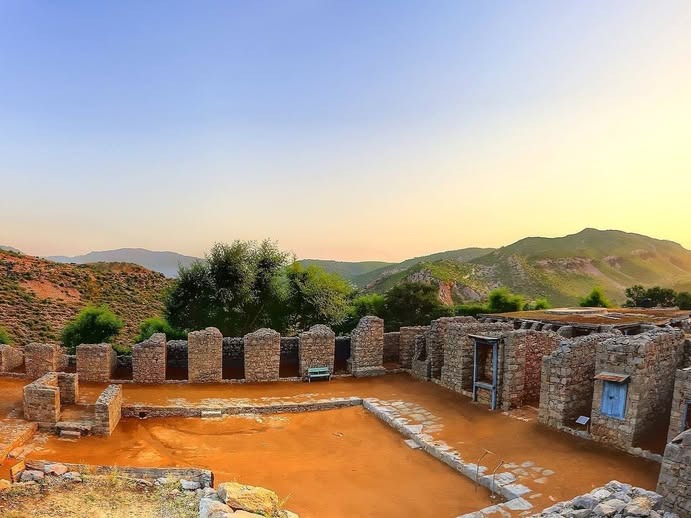
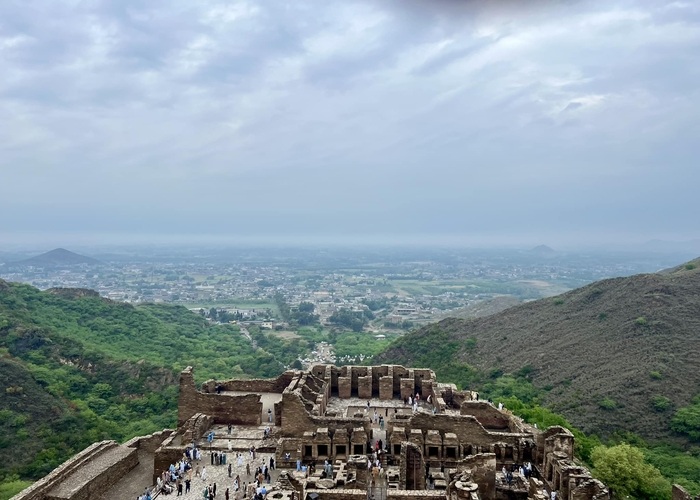
Takht-i-Bahi (The Throne of Bahi) is one of the most well-preserved Buddhist monasteries in Pakistan. Located 17 kilometers from Mardan on a hill, this cloister was founded in the 1st century and remained an essential Buddhist educational and cultural center for many centuries. It is 165 kilometers northwest of Islamabad, the capital city of Pakistan, in the Mardan District.
Takht-i-Bahi, which translates to The Spring Throne, was discovered in 1836 and was listed as a UNESCO World Heritage Site in 1980. Local legend suggests it is after a nearby spring. Due to its elevation of 500 feet above the hill, the site has been suitable for this ancient monastery throughout the centuries.
Takht-i-Bahi is unique due to its extensive layout and various areas, including monk cells, halls, meeting rooms, and different stupas. It is situated on a slight elevation, surrounded by hills, offering an extraordinary view of the landscape. While the main sculptures have relocated to various museums, one can still imagine the beauty of the site during its prime.
Inside the hermitage, the meditation cells where worshippers practiced are a must-visit, along with the ruins of conference rooms and classrooms. The site features a central Stupa Court, a votive stupas court, and a group of three stupas.
The original monastery was built during the 1st century BC, as design, construction methods, and materials aligned. Inscriptions found in the temple support this claim, which mentions the name of Gondophares I, a historical figure of that time.
The period from the 3rd to the 5th centuries AD marked the second and third construction phases of the monastery, coinciding with the rise of the Kushan Empire. Buddhism flourished during this time, contributing to the expansion of the Takht-i-Bahi site. The Great Stupa Court and the Assembly Hall were constructed during this period.
The final construction phase, which occurred between the 6th and 7th centuries AD, witnessed the construction of the Tantric Complex, reportedly during the rule of the Huns.
Comprising a series of stone buildings in the Gandhara style, Takht-i-Bahi was constructed using local stone blocks set in a mortar made from lime and mud.
Must Read: Must Visit Places in Naran Kaghan
You can divide this grand ensemble of structures into four primary areas:
It contains many stupas of mostly similar sizes, located in the central courtyard.
This sanctuary features assembly halls, dining areas, a courtyard, and impressive living quarters, which were two stories high.
This region comprises stupas similar to those in the Stupa Court, built at a later time and on a hill higher than the original Stupa Court, as well as a courtyard and living partitions.
This complex features numerous meditation cells with low openings and dim interiors. Located on the opposite hill from the Stupa Court.
Once atop the central Stupa Court, visitors can feel a breeze of mysticism and self-awareness as they take in the expansive valley from the throne, providing a moment of disconnection from the world.
Historical records indicate that the monastery was in constant use until around the 7th century, after which documentation becomes unclear.
Best Time to Visit: The busiest time to visit the monastery is between September and April, when the weather is more temperate.

Badshahi Mosque is one of Lahore’s most magnificent historical landmarks, reflecting exceptional Mughal architecture and cultural heritage. The atmosphere is truly captivating, especially during the evening when the lights enhance its beauty. It remains a must-visit destination for anyone exploring Lahore.
Completed in 1673 during the reign of Mughal Emperor Aurangzeb, this grand mosque is located just north of Lahore’s old city. Reflecting Aurangzeb’s emphasis on military organization and campaigns, the mosque’s architecture appears robust and impressive, with less focus on intricate details.
Nonetheless, the three domes, along with the surrounding eight minarets, rectangular courtyard, and gate building, showcase a skillful design.